Notifications

4 minutes, 48 seconds
-287 Views 0 Comments 0 Likes 0 Reviews
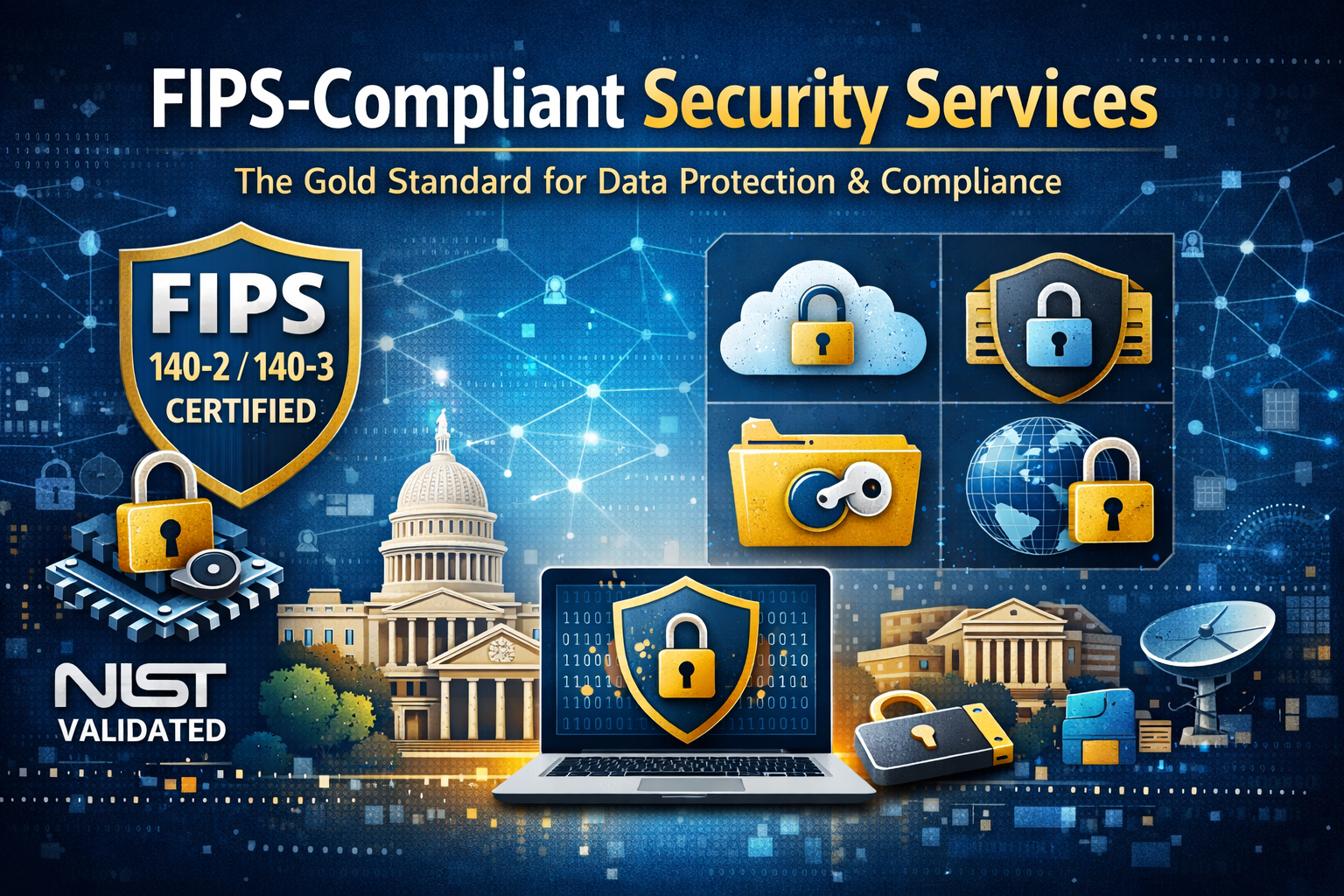
In an era where data breaches and cyber threats are escalating in both frequency and sophistication, organizations can no longer rely on basic security measures. Regulatory bodies and enterprise customers now demand proven, standardized, and validated security controls. This is where FIPS-compliant security services come into play.
The Federal Information Processing Standards (FIPS) define strict requirements for cryptographic security, ensuring that sensitive data is protected using validated and trustworthy mechanisms. For organizations operating in regulated industries—or serving government clients—FIPS compliance is not optional; it is essential.
FIPS, developed by the National Institute of Standards and Technology (NIST), establishes security standards for information systems used by U.S. federal agencies and contractors. Among these standards, FIPS 140 is the most critical, as it governs cryptographic modules responsible for encryption, decryption, digital signatures, and key management.
A FIPS-validated cryptographic module has undergone rigorous testing by accredited laboratories, ensuring it meets defined security requirements. This validation provides confidence that encryption mechanisms are implemented correctly and resistant to known attack vectors.
A FIPS-compliant security service is any technology or platform that uses FIPS-validated cryptographic modules to protect data. These services ensure encryption processes align with government-grade security standards while supporting enterprise-scale deployments.
Typical FIPS security services include:
Secure encryption for data at rest and in transit
FIPS-enabled TLS and VPN solutions
Hardware Security Modules (HSMs)
Key Management Services (KMS)
Secure authentication and digital signature services
Such services are commonly offered by cloud providers, security vendors, and enterprise platforms that operate in compliance-driven environments.
While FIPS 140-2 has long been the industry benchmark, FIPS 140-3 represents the next evolution in cryptographic security. It aligns more closely with modern international standards and introduces enhanced testing and lifecycle requirements.
Key differences include:
Stronger alignment with ISO/IEC standards
Updated requirements for entropy and randomness
Improved resistance to modern cryptographic attacks
Organizations planning long-term security strategies are increasingly transitioning toward FIPS 140-3–validated services to future-proof their compliance posture.
FIPS security services are widely adopted across industries where data confidentiality and regulatory compliance are paramount, including:
Government and public sector
Defense and aerospace
Banking and financial services
Healthcare and life sciences
Cloud and SaaS providers serving regulated clients
For these sectors, FIPS compliance often determines eligibility for contracts, partnerships, and certifications.
Implementing FIPS security services delivers tangible business and security advantages:
Regulatory compliance with federal and industry mandates
Validated cryptography tested by independent laboratories
Reduced security risk through standardized encryption practices
Enhanced customer trust and enterprise credibility
Competitive advantage in government and regulated markets
Rather than relying on proprietary or unverified encryption, organizations gain assurance through globally recognized standards.
When evaluating FIPS-compliant services, organizations should consider:
Validation status (active and listed by NIST)
Support for FIPS 140-3 readiness
Integration with existing infrastructure
Performance impact and scalability
Vendor transparency and compliance documentation
A strategic approach ensures compliance without compromising operational efficiency.
FIPS-compliant security services represent more than just a regulatory checkbox—they are a foundation for building resilient, trustworthy, and future-ready security architectures. As compliance requirements tighten and cyber threats evolve, adopting FIPS-validated cryptography is a decisive step toward safeguarding sensitive data and maintaining organizational credibility.
For enterprises operating in high-stakes environments, FIPS is not just a standard—it is a commitment to security excellence.
FIPS compliance FIPS 140-2 FIPS 140-3 FIPS security services cryptographic security data encryption ********** security standards NIST compliance secure key management cybersecurity compliance


