

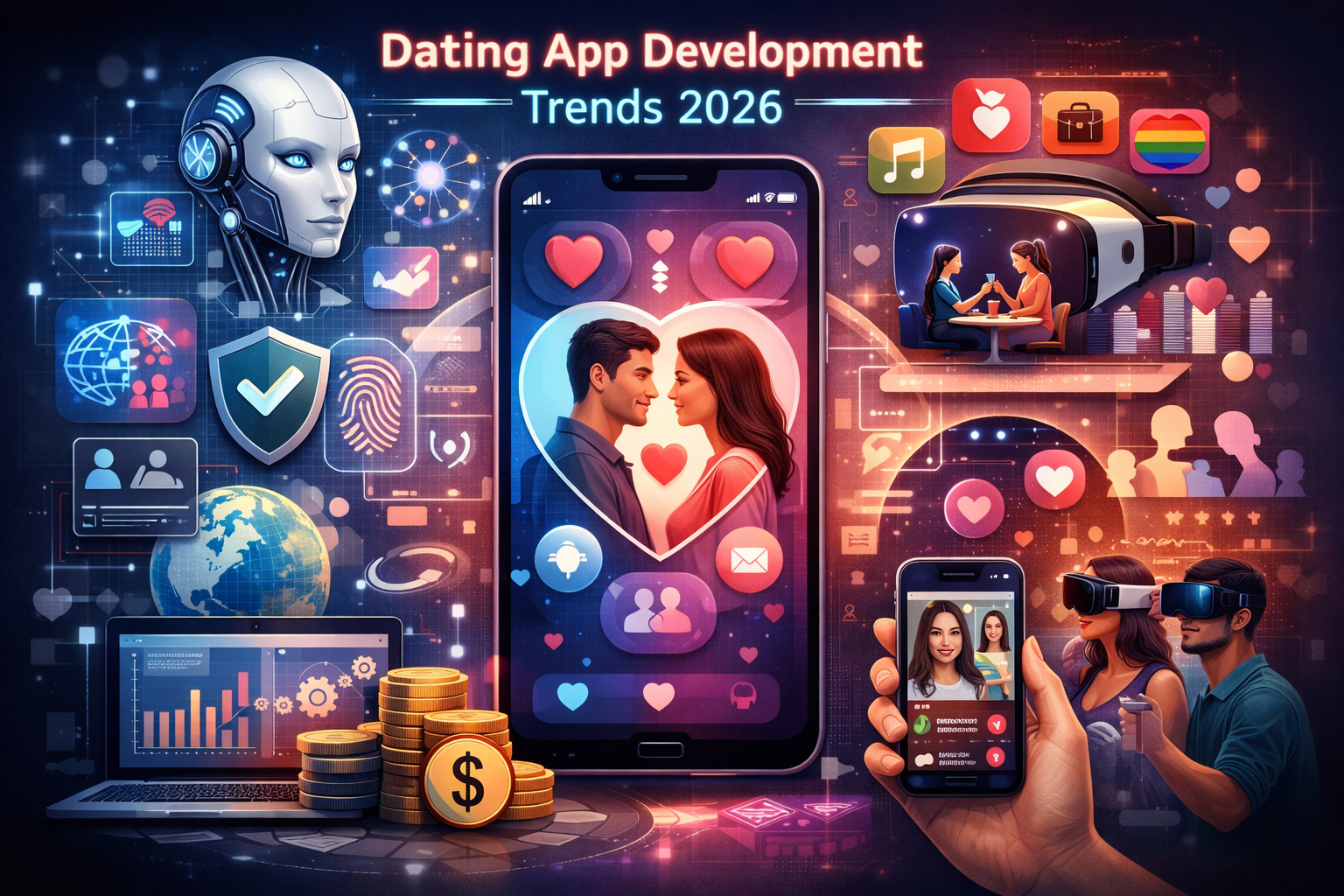
The global dating app market is entering a new phase in 2026, shaped by changing user behavior, stricter data regulations, and rapid advances in artificial intelligence. Users are no longer satisfied with simple swipe-based matching. They expect meaningful connections, higher safety standards, and experiences tailored to their personalities, values, and lifestyles. For businesses, this evolution means that dating app development is no longer about copying existing models but about building intelligent, secure, and scalable ecosystems that can adapt over time. Companies offering dating app development services must now balance innovation with compliance, user trust, and long-term monetization strategies.
AI-Driven Personalization as a Core Product Differentiator
Artificial intelligence has moved beyond basic matchmaking algorithms. In 2026, next-generation dating platforms rely on behavioral AI that learns from user interactions, communication patterns, and engagement history. This allows apps to suggest matches based not only on preferences but also on emotional compatibility and conversation dynamics. AI-powered personalization extends to profile recommendations, ice-breaker suggestions, and even adaptive user interfaces that change based on how users interact with the app. For businesses, investing in advanced AI capabilities is no longer optional; it is essential for reducing churn and increasing user satisfaction in a competitive market.
Trust, Safety, and Identity Verification as Growth Enablers
User trust has become one of the strongest drivers of retention in dating platforms. In 2026, users expect robust verification mechanisms such as biometric authentication, AI-based photo verification, and real-time fraud detection. Safety features like in-app reporting, content moderation powered by machine learning, and proactive detection of harmful behavior are now standard expectations rather than premium add-ons. Businesses building modern dating platforms must integrate trust and safety into the core architecture, as these elements directly impact brand reputation and regulatory compliance across global markets.
Niche Dating Platforms and Community-Centric Experiences
The era of one-size-fits-all dating apps is fading. Users increasingly gravitate toward niche platforms focused on shared values, professions, lifestyles, or cultural backgrounds. In response, many businesses are opting for a white label dating app approach to launch targeted platforms quickly while retaining the flexibility to customize features and branding. Community-driven experiences, such as interest-based groups, live virtual events, and moderated discussions, help foster deeper engagement and differentiate platforms from mainstream competitors. This trend highlights the importance of scalable architectures that can support multiple niche communities within a single ecosystem.
Integration of Immersive and Interactive Technologies
Immersive technologies are reshaping how users interact on dating platforms. Features such as short-form video profiles, interactive stories, and live streaming are becoming integral to user engagement. Some platforms are experimenting with augmented reality for virtual dates and interactive experiences that simulate real-world interactions. These innovations help users form more authentic connections before meeting offline. For businesses, adopting immersive features requires careful planning around performance optimization, data usage, and cross-device compatibility.
Data Privacy, Compliance, and Ethical Technology Design
As data privacy regulations continue to expand globally, dating app platforms must prioritize transparent data practices and ethical AI usage. Users in 2026 are more aware of how their personal information is collected and used. Clear consent mechanisms, data minimization strategies, and explainable AI models are becoming critical components of responsible platform design. Businesses that proactively address privacy and ethics not only reduce legal risks but also build long-term trust with their user base, which is essential in a relationship-focused digital environment.
Monetization Models Focused on Long-Term Value
Traditional subscription models are evolving into more flexible and value-driven monetization strategies. In 2026, successful dating apps combine freemium access with premium features such as advanced filters, enhanced visibility, and exclusive community events. AI-driven insights allow platforms to personalize monetization offers based on user behavior and engagement levels. Businesses leveraging dating app development services must design monetization systems that enhance the user experience rather than disrupt it, ensuring sustainable revenue growth without alienating users.
Scalability and Performance for Global Expansion
As dating platforms expand into new regions, scalability becomes a critical technical requirement. Cloud-native architectures, microservices, and API-driven integrations enable apps to handle high traffic volumes and rapid feature updates. Localization, multi-language support, and region-specific compliance features are essential for global growth. Businesses planning to scale must ensure their technology stack is future-ready, capable of supporting millions of users while maintaining performance and security.
Conclusion
Dating app development in 2026 is defined by intelligence, trust, and adaptability. Businesses that want to build next-generation platforms must go beyond basic matching features and focus on AI-driven personalization, robust safety mechanisms, niche community engagement, and ethical data practices. By leveraging modern architectures and flexible models such as a white label dating app, companies can accelerate time to market while maintaining the ability to innovate. Ultimately, success in this space depends on creating meaningful, secure, and engaging experiences that align with evolving user expectations and global standards.
FAQs
What makes dating app development in 2026 different from previous years?
Dating app development in 2026 focuses heavily on AI-driven personalization, enhanced safety features, and ethical data practices. Unlike earlier years, platforms must prioritize trust, niche targeting, and immersive experiences to remain competitive.
Why are dating app development services important for businesses entering this market?
Professional dating app development services provide businesses with the technical expertise, compliance knowledge, and scalability planning required to build secure and future-ready platforms. This reduces development risks and accelerates time to market.
How does a white label dating app benefit startups and enterprises?
A white label dating app allows businesses to launch quickly using a pre-built framework while customizing branding and features. This approach reduces development costs and enables faster entry into niche dating markets.
What role does AI play in modern dating platforms?
AI plays a central role in matchmaking, personalization, fraud detection, and content moderation. It helps platforms deliver more relevant matches, improve user safety, and enhance overall engagement.
How can dating apps balance monetization with user experience?
Dating apps can balance monetization by offering value-driven premium features, flexible subscriptions, and personalized offers. When monetization enhances functionality rather than restricting access, users are more likely to engage and convert.


