Notifications

7 minutes, 13 seconds
-34 Views 0 Comments 0 Likes 0 Reviews
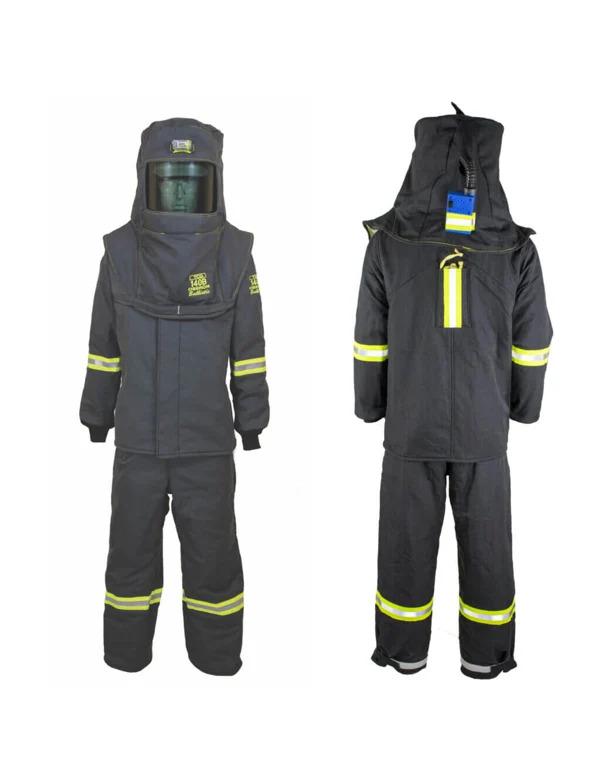
Choosing the right arc flash suit starts with understanding risk, not price or comfort. Electrical incidents happen instantly and leave no margin for error. When work exposes personnel to extreme incident energy, a 140 cal suit provides the highest level of arc-rated protection used in Australian utilities, substations, mining, and heavy industrial environments.
Selecting the correct arc flash PPE protects lives, supports compliance with Australian WHS obligations, and ensures work can proceed safely in high-risk electrical settings. Arc flash protection is not optional. It is a critical control under Australian work health and safety law.
An arc flash suit protects workers from the intense thermal energy, pressure wave, and molten metal produced during an arc flash event. These incidents can generate temperatures exceeding 19,000°C in a fraction of a second.
Arc-rated PPE works by:
Resisting ignition
Limiting heat transfer to the body
Reducing the severity of burn injuries
Shielding against molten metal and debris
The objective is not comfort. It is survivability and injury minimisation when all other controls have failed.
Arc flash ratings are measured in cal/cm², representing the amount of incident thermal energy a fabric can withstand before a second-degree burn occurs. Higher ratings provide greater protection but also increase garment weight and bulk. Typical protection levels used in Australian workplaces include:
8–12 cal/cm² for low-risk electrical maintenance
25–40 cal/cm² for higher-risk industrial tasks
75 cal/cm² and above for severe exposure environments
A 140 cal suit sits at the highest end of this scale and is reserved for extreme incident energy scenarios.
A 140 cal suit is not intended for routine electrical work. It is used where incident energy calculations show exposure beyond the limits of standard arc flash PPE. Common Australian use cases include:
Utility transmission and distribution work
High-voltage substations
Mining and resources infrastructure
Large industrial switchgear and generators
Live work where fault levels are extreme
In these environments, lower-rated PPE may fail under exposure, placing workers at unacceptable risk.
Arc flash PPE in Australia must align with local WHS legislation and recognised standards, not just international benchmarks. Key compliance considerations include:
AS/NZS 4836 – Safe working on or near low-voltage electrical installations
Model WHS Regulations and state-based WHS laws
Duty of care obligations placed on PCBUs
Evidence-based risk assessment and incident energy analysis
While international standards such as IEC testing methods may support certification, Australian regulators expect PPE selection to be justified through risk assessment, documentation, and task-specific controls.
Maximum protection does not mean maximum wear time. High-calorie arc flash suits are heavy, restrictive, and physically demanding. Effective Australian safety systems:
Match PPE to the specific task and calculated incident energy
Minimise exposure duration
Use engineering and administrative controls wherever possible
Treat PPE as the final layer of defence
Over-protection can introduce secondary risks such as fatigue, heat stress, and reduced mobility. These risks must also be managed under WHS obligations.
An arc flash suit functions as a complete system, not individual garments. Critical considerations include:
Full body coverage with no exposure gaps
Correct integration of hood, face shield, jacket, and trousers
Compatibility with base arc-rated clothing
Proper sizing to maintain mobility and protection
A poorly fitted 140 cal suit compromises safety regardless of its rating.
Australian WHS law requires more than PPE provision. Workers must be trained to use it correctly. Effective arc flash PPE training includes:
Hazard identification and risk assessment
Suit inspection before each use
Correct donning and doffing procedures
Heat stress recognition and management
High-calorie PPE without proper training increases risk rather than reducing it.
Not all high-risk tasks require the highest possible rating. Incident energy studies determine the appropriate level.
In many Australian industrial settings, a 75 cal suit offers strong protection while allowing better mobility and reduced heat burden. This level is commonly used where exposure is severe but controlled through isolation, switching procedures, or limited-duration work. A 140 cal suit becomes essential only when the calculated incident energy exceeds the lower PPE capabilities.
Arc flash PPE is a safety investment, not a discretionary expense. Choosing lower-rated protection to save money exposes workers to catastrophic injury and organisations to serious legal and regulatory consequences. Under Australian WHS law, cost is not a valid justification for reduced safety where serious risk exists. The true cost of inadequate protection is measured in lives, not budgets.
Choosing the right arc flash suit in Australia means aligning protection with real-world risk, legal obligations, and task-specific conditions. A 140 cal suit protects workers facing the highest incident energy environments, while lower ratings serve controlled but still hazardous situations.
Australian compliance depends on documented risk assessment, appropriate PPE selection, correct fit, and proper training. When safety decisions follow evidence rather than assumptions, outcomes improve.
The right arc flash suit does more than meet standards. It protects workers, supports compliance, and saves lives.