Notifications

5 minutes, 49 seconds
-33 Views 0 Comments 0 Likes 0 Reviews
Industrial laser technology is evolving at an unprecedented pace. As manufacturing enters a new era of automation, precision, and sustainability, lasers are no longer just cutting tools—they are becoming intelligent, adaptive systems that redefine industrial productivity.
In 2025, emerging laser technologies will significantly impact sectors such as automotive, aerospace, electronics, medical devices, and heavy engineering. At Essell, staying ahead of these innovations is critical to delivering high-performance laser solutions that meet tomorrow’s manufacturing demands.
This article explores the key emerging trends in industrial laser technology for 2025 and what they mean for modern industries.

Artificial Intelligence (AI) is transforming industrial laser machines into self-optimizing systems.
AI-driven laser systems reduce material waste, increase uptime, and improve consistency—making them ideal for high-volume, precision manufacturing.
Ultra-fast lasers, including femtosecond and picosecond lasers, are gaining traction in 2025 due to their ability to process materials with minimal thermal damage.
These lasers enable cold processing, allowing manufacturers to achieve cleaner edges, higher accuracy, and superior surface quality.
Fiber lasers continue to dominate the industrial market due to their energy efficiency, durability, and low maintenance requirements.
Fiber lasers are becoming the preferred choice for cutting, welding, marking, and engraving across multiple industries.

Sustainability is no longer optional. In 2025, industrial laser manufacturers are prioritizing eco-friendly and energy-efficient designs.
Industrial lasers support greener manufacturing by lowering carbon footprints while maintaining high productivity.
Laser machines are increasingly designed to integrate seamlessly with Industry 4.0 ecosystems.
This trend allows manufacturers to build fully automated, data-driven production lines with enhanced efficiency and traceability.
Laser welding is advancing rapidly, especially for lightweight materials and complex assemblies.
These developments are critical for industries like automotive, aerospace, and EV manufacturing, where strength, precision, and speed are essential.
One-size-fits-all solutions are becoming obsolete. In 2025, manufacturers demand customized laser systems tailored to specific applications.
At Essell, customization ensures clients receive laser solutions optimized for performance, reliability, and ROI.

As laser power increases, safety innovations are also advancing.
These improvements ensure safer working environments without compromising productivity.
The emerging trends in industrial laser technology for 2025 are not just technological upgrades—they represent a shift toward smarter, cleaner, and more efficient manufacturing.
Manufacturers who adopt these innovations gain:
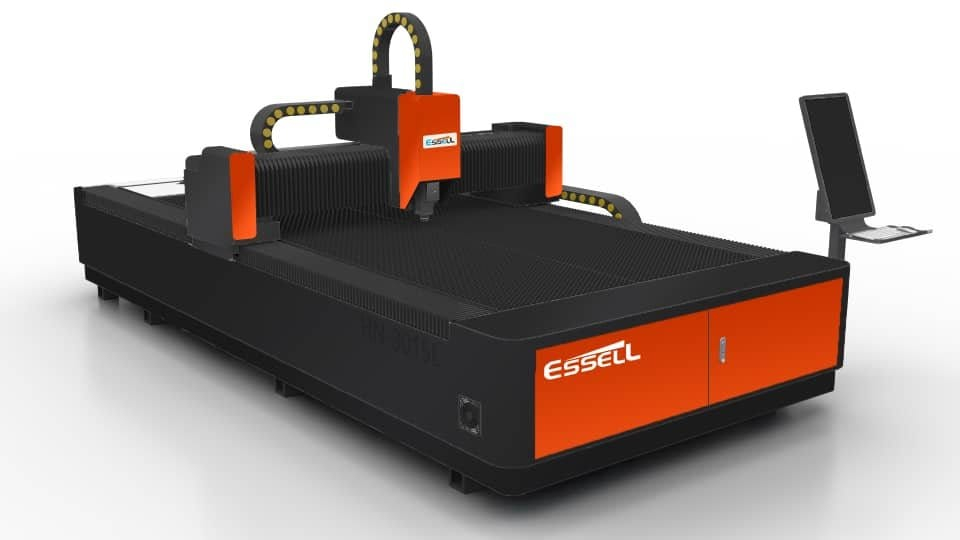
At Essell, we continuously align our industrial laser solutions with the latest technological advancements. By embracing innovation, automation, and sustainability, we help industries prepare for the future of manufacturing.
Our focus is on delivering:
The industrial laser landscape in 2025 will be defined by intelligence, efficiency, and adaptability. From AI-powered systems to ultra-fast lasers and sustainable designs, these trends are reshaping how industries operate.
Businesses that invest in next-generation laser technology today will lead the manufacturing revolution of tomorrow.
Explore future-ready industrial laser solutions with Essell—where precision meets innovation.
CNC FIBER LASER CUTTING MACHINE NC BENDING MACHINE CNC BENDING MACHINE FIBER LASER CUTTING MACHINE SINGLE BED FIBER LASER CUTTING MACHINE DOUBLE BED FIBER LASER MARKING MACHINE NC PRESS BRAKE MACHINE CNC PRESS BRAKE MACHINE