Notifications

13 minutes, 25 seconds
-11 Views 0 Comments 0 Likes 0 Reviews
Modern work environments are no longer all desks, computers and white walls. The business world has transformed the office into a highly collaborative, creative, and well-being focused environment. In particular, biophilic design is a rapidly growing trend that brings the outside in. But why is it burgeoning into such a powerful theme in creating a modern office space? Let's try to unpack it.
What is Biophilic Design?
Biophilic design is based on the biophilia principle — humans have an innate tendency to seek connections with nature. Workplace design in biophilia involves the introduction of natural light, plants, water, natural patterns, and sustainable materials into the built environment of the office. The goal is to design a workplace that is connected to nature and creates a space for teams are more relaxed, feeling inspired, and more connected.
Why is Biophilic Design Becoming Popular in the Workplace?
1. Office Workplaces are Changing
The emphasis in traditional offices was on efficiency and leveraging space. Today, employee wellness, creativity, and collaboration are valued more equally, which fits in with the attributes of biophilic design.
2. Employee Health Impacts
With improved air quality from indoor plants, sleep cycles regulated by natural light, and stress relief due to water features, there are fewer health issues and less absenteeism to contend with.
3. Improved Productivity
Studies show natural surroundings lead to an increase in concentration, reduction in fatigue, and improved cognitive performance. Employees working in biophilic-designed workplaces report higher levels of efficiency.
4. Attracting and Retaining Talent
A well-designed biophilic workplace is a significant brand statement. Millennials, in particular, are well aware of the increased connection between work-life balance and individual well-being. Gen Z also makes lower-level and less important life decisions long-term, so the catch of a more wellness-oriented workplace will be welcomed.
5. Green and Sustainability Initiatives
More companies are implementing eco-friendly business strategies. Biophilic design is an elegant approach to sustainable building practices, making it easier for organizations to achieve green strategies and meet LEED or WELL building certification programs.
Natural Light – Making full use of windows, skylights, and glass partitions and panels to enhance daylight throughout the office space....
Indoor Greenery – Plants, moss walls, potted trees, and vertical gardens that help purify the air and create vibrancy...
Natural Materials – Furniture and finishes made of wood, stone, rattan, and/or bamboo...
Water Features – Indoor fountains, aquariums, and/or water soundscapes to create a calming atmosphere...
Nature-based Patterns – Biomorphic shapes and textures included in wall panel designs, ceiling shape and finish, and/or fabrics...
Outdoor Spaces – Balconies, rooftop gardens, and terraces specifically designed for breaks and informal meetings...
Air & Ventilation – Smart design to improve airflow and ensure oxygenated air...
1. Physical Health Benefits
Improved air quality
Less sick day absence
Less eye strain, headaches
2. Mental Well-being Benefits
Reduced stress and anxiety
More creativity and problem solving
Improved mood and overall work satisfaction
3. Organizational Benefits
Increased engagement from employees
Less turnover attrition
Improved employer branding
1. Small Offices
Biophilic design does not need to be reserved for large businesses—small offices can have a biophilic strategy with some careful, spaced-based considerations.
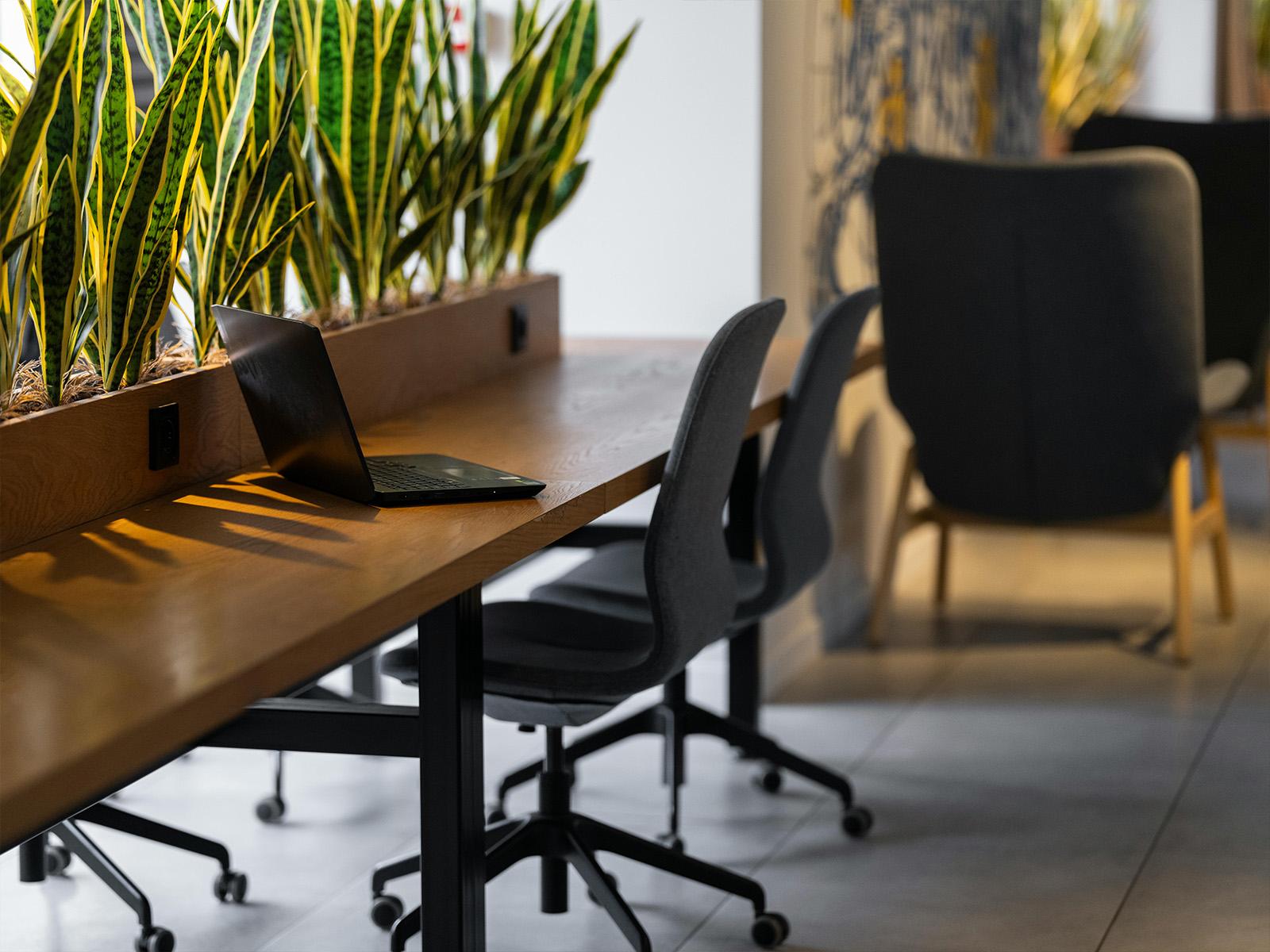
Desk Plants & Potted Greenery: Even adding one or two low-maintenance plants like snake plants, succulents, or pothos can enhance air quality and advance a calming atmosphere.
Natural Wallpapers & Finishes: Design options that do not use space include wallpapers with leafy or floral patterns, wood-like laminate surfaces, and finishes that resemble stone.
Daylighting Effect: Natural light can decrease the amount of dependence on electric light, we can use skylights or keep windows clear of any obstructions.
Compact Green Walls: There is often no room for full vertical gardens, but slim living installations, compact wall-mounted planters, or modular shelving containing potted plants have a suitable fit for small spaces.
Multi-functional Furniture: Desks or shelving with a built-in planter can keep space use efficient while maximizing greenery/potted plants.
Natural tones & materials: Using earthy colors, wood-based furniture, and life-cycle based fabrics offer nature-based relief.
Large workplaces can take biophilia to larger scales, contributing to immersive natural environments.
Living Walls & Atriums: Large scale vertical gardens in lobbies, reception areas, or central atriums provide a bold natural anchor to public spaces.
Indoor gardens & formal breakout spaces: Establish large green zones with plants, trees, or moss walls so employees can decompress and co-create away from their desk.
Open Plan layouts with natural dividers: Use planter walls , timber slats or bamboo screens instead of walls to create work zones.
Water features: Plan indoor fountains, aquariums, or reflecting pools to bring a sense of calm and reduce workplace stress.
Natural ventilation & airflow: A large corporate office can use open corridors or airflow systems to provide fresh air flow.
Green cafeterias & dining areas: Include additional green areas with dining spaces, which can promote better employee health in their breaks.
Material Collection: Large workspaces can use: stone, bamboo, and reclaimed wood design features across flooring, ceiling or furniture choices to enhance the natural space.
In hybrid work environments, the design should achieve a dual purpose: to balance time for collaboration with in-office work, with the flexibility of remote work. Use of biophilic design can help make an office feel exciting for employees to visit and create a sense of anticipation.
Flexible Workstations with Outdoor Views: Workstations or hot desks placed adjacent to windows to view the outside world encourage employees to attend the office instead of opting to work from home.
Collaboration Breakout Zones: Designing lounge areas that include nature textures, plants, and warm soft lighting can enhance team spirit and increase informal conversations.
Outdoor Extensions: Terraces, balconies, and green roof gardens can provide hybrid workers the option of stepping outside to hold meetings or recharge.
Wellness Rooms: Spaces that include an abundance of greenery, natural ambient sound, and ergonomically designed furniture offer employees a refuge to slowly recharge during chaotic schedules.
Technology and Nature 'Nurture': Technology driven hybrid set-ups can effectively integrate biophilic design and digital collaboration technology. Hybrid office spaces with technology should be situated in the middle of a viable biophilic design space...grow a biophilic area within a conference room!
Biophilic "Pods": Acoustic pods or phone booths made of wood and other natural textures allow for private or quiet work along with a little added nature.
Flexibility and Autonomy for Employees: Employee workspace choice should include multiple station types (open, semi-private, and outside garden spaces) to enhance flexibility and make the employees feel empowered.
Green Walls: Vertical gardens in lobbies or meeting rooms.
Open Layouts: Spaces designed to maximize daylight.
Relaxation Zones: Nature-inspired chill-out areas with plants, water, and natural textures.
Outdoor Extensions: Cafeterias or terraces surrounded by greenery.
Initial Costs – Setting up green walls or water features can be expensive.
Maintenance – Plants and natural elements require regular upkeep.
Space Constraints – Not all offices have room for large natural installations.
Use low-maintenance indoor plants (snake plant, pothos, peace lily).
Opt for artificial green walls in areas where maintenance is difficult.
Incorporate biomorphic patterns and textures where space is limited.
Start small with desk plants and natural lighting improvements.
With the rise of hybrid and remote working models, offices will have to become a destination that employees want to visit. Biophilic design can provide that attraction and draw, giving the employee an experience that is engaging and revitalising whilst supporting their health and wellness. It is not simply a design style; it is the future of workplace culture.
How SKV India Can Help?
At SKV India, we create contemporary, future-ready office interior designs with a focus on holistic office function and visual interest. We co-create each office space with biophilic design principles; whether we have a living green wall, maximizing natural light, and integrating sustainable materials.
We understand that every office has different needs, and create biophilic-designed solutions based on your brand values, culture, and workspace demands. Every step of the process from visioning to reality, SKV delivers a workplace that is aesthetically pleasing and has a positive impact on health and wellness, productivity, and sustainability.
If you are ready to change an office into a place for employees to enjoy and for clients to admire, SKV India is your partner for building biophilic design into your office.
Biophilic design isn't just a trend; it's an overarching principle for designing workplaces that support people and the planet. It prioritizes a well-related generation of work, supports productivity, and meets sustainability targets. It is not hard to see why biophilic design is the latest buzz word in workplaces.
1. Is Biophilic design expensive?
Not always! While there are significant expenditures such as large green walls, simple changes such as incorporating indoor plants, natural materials, and changes to lighting are not expensive.
2. Does Biophilic design work in small offices?
Absolutely. The use of plants, natural texture, and natural lighting can easily accommodate spaces of all sizes.
3. Can Biophilic design actually increase productivity?
Yes! Research indicates that people are more productive (15-20%) when working in environments that are imbued with nature.
4. Where do I start when it comes to Biophilic design?
Start small by introducing greenery to your office space; if you are limited by your environmental potential, then maximize natural light and incorporate natural materials to your office. Continue to build out into a living wall or introduce a water feature.


