Notifications

18 minutes, 57 seconds
-70 Views 0 Comments 0 Likes 0 Reviews
In industries where extremely high temperatures are used, conventional materials are not able to withstand the high temperatures. At this point, refractory materials play an important role. Among the various refractory materials available today, refractory castables are one of the most used forms of monolithic refractory materials, owing to their durability, flexibility, and resistance to high temperatures. A refractory castable can be described as a combination of refractory aggregates, binders, and additives that can be mixed with water and cast into molds or structures, where it can be hardened to form strong, heat-resistant materials.
Refractory castables can be divided into different forms, namely dense conventional castables, low-cement castables, and insulating castables, based on specific requirements and applications.
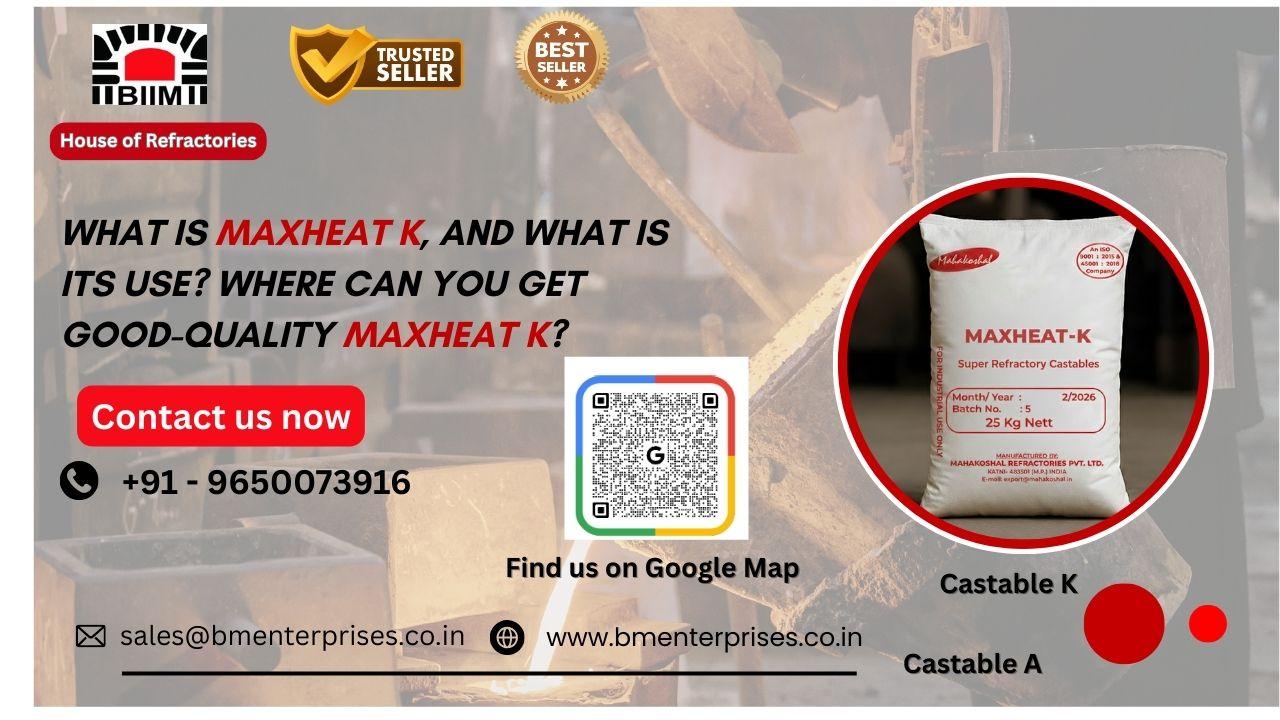
One of the most trusted and used materials of this kind is Maxheat K, which can be described as a high-quality refractory castable that possesses high strength and resistance to high temperatures. It can be used as fire cement or refractory cement, which can be applied to various furnaces and heating equipment. With the increasing demand for materials that can be trusted to operate at high temperatures, materials like Mahakoshal Maxheat K have become an integral part of various industries today.
For instance, one could consider a steel furnace operating at temperatures beyond 1500-1600°C. Without refractory materials, such equipment would soon disintegrate. In many ways, refractory materials could be described as the unsung heroes of many industries. Without refractory materials, many modern industrial processes would simply not exist.
Steel plants, rolling mills, cement plants, and power plants are some of the many industries that use refractory materials in their operations. These materials ensure that equipment is protected from various factors such as thermal shock, heat dissipation, and equipment longevity. According to statistics, modern high-alumina refractory castables are capable of withstanding temperatures beyond 1600°C.
It is here that the Maxheat K refractory castable differs from the rest. It has a high alumina content coupled with specialized binders that make it a dense and strong material that can withstand the rigors of the industrial environment. It is not only heat-resistant but also retains its strength when subjected to heavy mechanical stress. It is because of this that Maxheat K is used in heavy industrial applications.
Maxheat K is a dense refractory castable with high alumina content, which makes it suitable for use at very high temperatures. It is commonly used to make furnace linings, boilers, and kilns. It is normally made using high-purity alumina aggregates, calcium aluminate cement, and special additives.
The refractory castable has 60% Al2O3, which makes it very effective at such high temperatures. The refractory castable has been designed to be very effective at such high temperatures due to the presence of alumina. Alumina-based refractory castables are known to be very effective at such high temperatures since they are not affected when subjected to such extreme heat. When mixed with water and poured into position, the refractory castable will be effective at withstanding mechanical stresses.
Another significant characteristic of Castable K is that it has a hydraulic bonding nature, which means that it sets and hardens after being mixed with water. After being properly cured and fired, it has a mechanical strength that is extremely high. This makes it suitable for use in conditions where equipment is subjected to continuous thermal cycling, heavy loads, and molten materials.
In industrial applications, Maxheat K can be classified as a dense conventional castable. It is also known as dense concentional castables in the refractory industry. These types of materials are designed to provide a combination of strength, heat resistance, and durability. Because of this, they are often used in the construction and repair of high-temperature structures where refractory bricks are no longer sufficient.
Many people in the refractory industry often refer to Maxheat K as Whytheat K, and this can sometimes cause confusion among buyers. However, the fact is that both names tend to point towards the same kind of high-alumina refractory castables used in heavy-duty thermal applications. The difference usually lies in the brand name or the specifications provided by the manufacturer, but not in the basic properties of the material.
Maxheat K and Whytheat K tend to have the same properties, including high thermal resistance, dense composition, and high mechanical strength. They are used in sectors where the temperature may go as high as 1600°C, and they are used for making furnaces, kilns, boilers, and other high-temperature equipment.
In the Indian refractory sector, Mahakoshal Castable K has emerged as a brand that is trusted for its reliability and quality. The product is distributed by BM Enterprises to industries in the Delhi NCR, Faridabad, Gurgaon, and other industrial areas, so that the manufacturers receive quality refractory materials for their use.
The performance of any refractory material depends on its technical specifications. Maxheat K is carefully designed to meet industrial standards for strength, density, and heat resistance.
| Property | Typical Value |
| Product Type | Dense Conventional Refractory Castable |
| Alumina Content | ~60% |
| Maximum Service Temperature | Up to 1600°C |
| Bulk Density | Around 2.2 – 2.7 g/cm³ |
| Cold Crushing Strength | Up to 60–90 MPa |
| Installation Method | Casting / Vibration |
| Packaging | Usually 25 kg Bags |
These specifications make Maxheat K suitable for demanding industrial applications that require reliable refractory protection.
In order to ensure that the refractory castable performs to the best of its ability, it is imperative that the installation process is done correctly. Before the application of the Castable K refractory castable, the surface should be clean and free of any particles such as dust, oil, or other substances. Additionally, anchoring structures may also be necessary to hold the refractory in place.
The dry refractory castable should then be mixed with clean water, approximately 11-12% by weight. It should then be well mixed to a workable state to facilitate the casting or vibration process.
After the refractory castable has been well mixed, it can then be poured or vibrated into the mold or structure. It should then be cured and dried in order to attain its full strength. It should also be noted that the refractory castable may require a process of heating to remove moisture. When the refractory castable is installed correctly, it will offer a strong and durable lining that can withstand harsh weather.
Dense conventional castables like Castable K are highly sought after due to their well-balanced properties of strength, durability, and heat resistance. Dense conventional castables are more abrasion-resistant and stronger compared to lightweight insulating castables. This makes them suitable for heavy industrial use.
The materials are also flexible when it comes to installation. The fact that they can be cast on site means that engineers can create complex shapes and seamless linings that would be difficult to achieve using conventional refractory bricks.
It is as important to find a good supplier as it is to select the material. It is always advisable to buy refractory materials from reliable distributors who assure the quality and authenticity of the material.
If you are searching for the best quality Castable K or Whytheat K, BM Enterprises is one of the reliable suppliers in Delhi NCR and Faridabad. The company is a supplier of a variety of refractory materials, including:
BM Enterprises provides reliable refractory solutions for industries such as steel plants, cement plants, boilers, and heat treatment units.
BM Enterprises has established a good name in the refractory market by providing refractory materials to industrial companies. They specialize in providing refractory materials that are strong enough to meet the high standards required in such applications.
BM Enterprises offers refractory materials such as Mahakoshal Maxheat K, Whytheat K, refractory castables, fire bricks, insulation bricks, and ceramic fiber materials. They ensure that their refractory materials are strong enough to meet industrial requirements by procuring materials from reliable sources.
For industries that require refractory materials, BM Enterprises is one such company that makes a significant impact in providing refractory materials.
In high-temperature industries, the reliability of refractory materials is an important factor in ensuring safe and efficient functioning. Castable K is one of the most popular high-alumina refractory castables because of its high thermal resistance, strength, and durability. Its ability to resist temperatures up to 1600°C makes it a popular choice for furnace linings, kilns, boilers, and other heating equipment in industries.
Its dense properties, high chemical resistance, and ease of installation make it a popular choice among engineers and maintenance personnel. Whether it is a new furnace lining or a repaired one, Mahakoshal Maxheat K is a reliable choice in extreme conditions.
For industries looking for good-quality Maxheat K, reliable suppliers such as BM Enterprises can provide genuine refractory materials that are made to meet industrial standards. The choice of material and supplier is an important factor in ensuring longer equipment life, increased efficiency, and less downtime.
1. What is the application of Maxheat K?
The primary application of Maxheat K is as a refractory castable or fire cement for lining furnaces, kilns, boilers, and other high-temperature equipment in industries.
2. What is the temperature resistance of Maxheat K?
Maxheat K has a temperature resistance of up to 1600°C, which makes it suitable for medium to high-temperature applications in industries.
3. Is Maxheat K the same as Whytheat K?
Yes, Maxheat K and Whytheat K are sometimes used interchangeably since they are similar high-alumina refractory castables used in industrial furnaces.
4. Which industries use Maxheat K?
Steel plants, cement plants, power plants, foundries, and petrochemical plants are some of the industries that use Maxheat K.
5. Where can I buy good-quality Maxheat K in India?
You can buy Mahakoshal Maxheat K refractory castable from BM Enterprises, which is a reliable supplier of refractory products in Delhi NCR and Faridabad.
maxheat k mahakoshal maxheat k refractory maxheat k what is maxheat k maxheat k refractory castable maxheat k fire cement maxheat k uses whytheat k whytheat k refractory castable dense conventional castables