

Introduction
Digital transformation in taxation is becoming a major priority for governments around the world. The United Arab Emirates is also moving toward a fully digital invoicing system to improve tax transparency, automate compliance, and reduce manual errors in financial reporting. For organizations using SAP platforms, especially SAP S/4HANA, adapting to the upcoming requirements is essential for smooth business operations.
Many multinational companies operating between the United States and the UAE rely on SAP S/4HANA as their core enterprise resource planning system. Because of this, understanding how UAE einvoicing s4hana integration works is important for finance teams, IT departments, and compliance managers.
SAP S/4HANA provides powerful automation capabilities, real-time financial reporting, and seamless system integration. When combined with UAE e-invoicing frameworks, businesses can manage invoicing processes more efficiently while staying compliant with government regulations. This article explains how the UAE e-invoicing environment works, how it connects with SAP S/4HANA, and what organizations should know before implementing the system.
Understanding the UAE E-Invoicing Framework
The UAE government is planning to implement a structured electronic invoicing model that allows invoices to be exchanged digitally between businesses and tax authorities. The goal is to create a standardized system where invoices are generated, validated, and reported electronically.
The UAE e-invoicing model is expected to follow global digital tax compliance trends similar to those implemented in other countries. Businesses will generate invoices in a structured format and send them through accredited service providers before the documents reach customers or authorities.
In this environment, companies running SAP systems will need proper configuration and integration to support uae e-invoicing s4hana functionality. Without proper implementation, businesses may face compliance challenges or delays in invoice processing.
The transition to electronic invoicing also improves operational efficiency. Instead of manual invoice processing, organizations can automate billing workflows and ensure real-time validation of financial data.
Why SAP S/4HANA Is Important for E-Invoicing
SAP S/4HANA is designed to handle large volumes of transactional data while providing real-time insights. Because invoicing is a critical part of financial operations, the platform plays a significant role in managing digital compliance requirements.
When companies implement uae einvoicing s4hana solutions, they benefit from several operational advantages.
Real-time invoice processing
SAP S/4HANA allows invoices to be generated and validated instantly.
Automated compliance checks
Tax and invoice validation rules can be configured within the system.
Integration with external platforms
S/4HANA can connect with government platforms and service providers for invoice submission.
Centralized financial management
All invoice data can be managed within a single ERP environment.
These features make SAP S/4HANA one of the most reliable platforms for implementing digital tax frameworks like UAE e-invoicing.
How UAE E-Invoicing Works with SAP S/4HANA
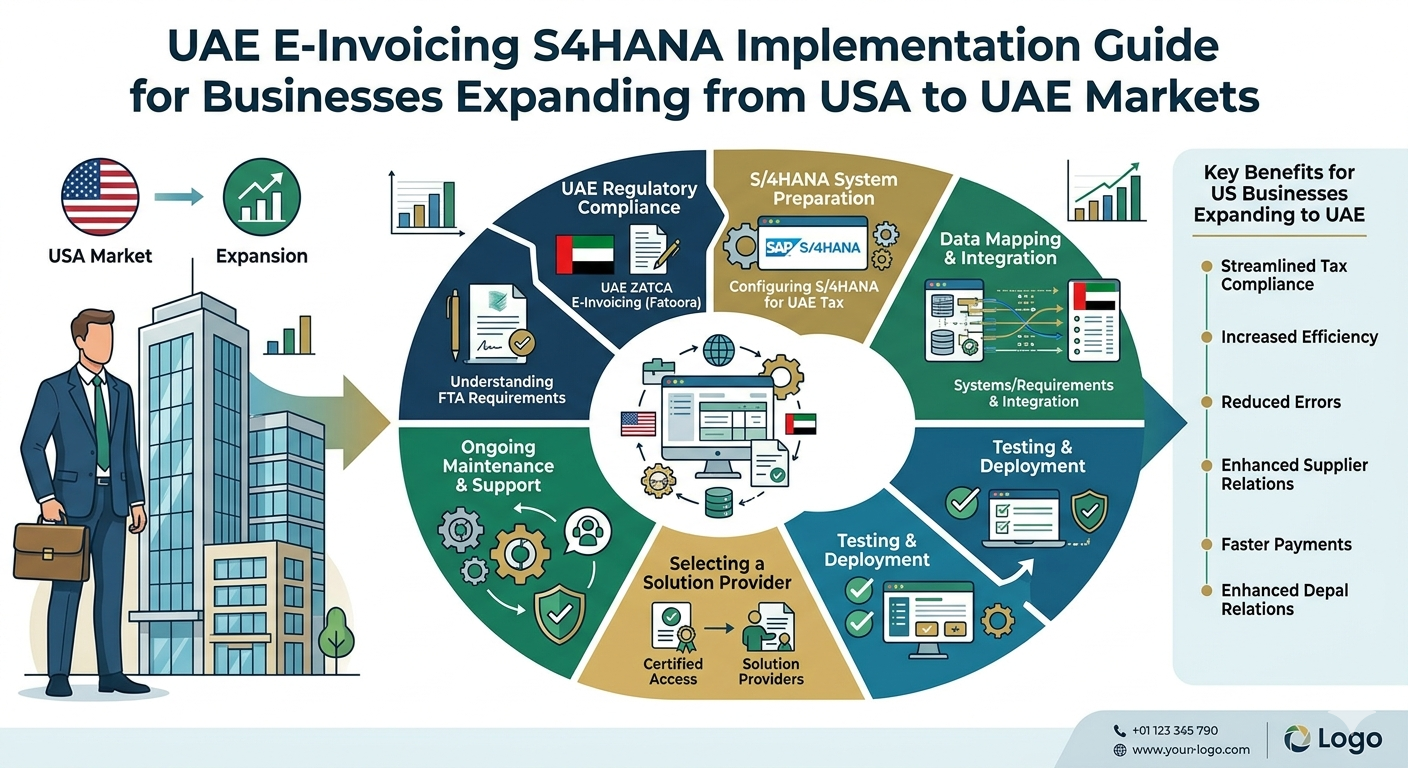
To support uae e-invoice s4hana implementation, businesses typically integrate SAP with external compliance platforms or middleware solutions. These systems ensure that invoice data follows the structured format required by authorities.
The general workflow includes several stages.
Invoice creation in SAP S/4HANA
The invoice is generated within the ERP system during billing or accounting processes.
Data transformation
The invoice data is converted into the structured format required by the UAE e-invoicing framework.
Validation and compliance checks
Before submission, the invoice is validated to ensure it meets regulatory standards.
Transmission through accredited service providers
Invoices are transmitted securely through approved service providers or platforms.
Confirmation and reporting
The system records confirmation from the network and updates the SAP database.
Through this process, organizations can efficiently manage uae einvoice s4hana requirements while maintaining accurate financial records.
Benefits of Implementing UAE E-Invoicing for S4HANA
Organizations adopting uae e-invoicing for s4hana gain multiple strategic and operational benefits.
Improved regulatory compliance
Digital invoicing ensures that businesses follow government tax regulations accurately.
Reduced manual errors
Automated invoice validation reduces mistakes that occur during manual data entry.
Faster invoice processing
Electronic workflows accelerate billing cycles and payment collection.
Better financial transparency
Real-time reporting improves financial decision making.
Enhanced audit readiness
All invoices are digitally stored and easily accessible for audits.
For companies operating in global markets, implementing uae einvoicing for s4hana also helps standardize invoicing processes across multiple regions.
Key Technical Components of UAE E-Invoice for S4HANA
When implementing uae e-invoice for s4hana, businesses typically work with several technical components within the SAP environment.
SAP Document Compliance
This SAP feature helps organizations manage electronic document reporting and digital compliance requirements.
Middleware or integration platforms
Many companies use integration platforms that connect SAP S/4HANA with government or service provider networks.
Invoice validation engines
These tools ensure that invoices meet the required structure and compliance standards before submission.
Secure transmission protocols
Electronic invoices must be transmitted securely to protect sensitive financial data.
These components work together to support uae einvoice for s4hana implementation while maintaining system stability.
Steps to Prepare for UAE S4HANA E-Invoicing Implementation
Businesses planning to implement uae s4hana e-invoicing should start preparing early to avoid compliance challenges.
Assess current SAP system configuration
Organizations should evaluate whether their SAP environment is ready for digital invoicing integration.
Review invoicing workflows
Existing billing processes may need adjustments to match structured electronic invoicing requirements.
Select a service provider
Companies must work with accredited service providers that facilitate invoice transmission and validation.
Update compliance documentation
Internal policies and procedures should be updated to reflect new digital invoicing regulations.
Train finance and IT teams
Employees responsible for invoicing should understand how the new system works and how to manage digital invoices.
Proper preparation ensures smooth adoption of uae s4hana einvoicing within the organization.
Challenges Businesses May Face
Although electronic invoicing offers many benefits, businesses may encounter challenges during implementation.
System integration complexity
Connecting SAP S/4HANA with external platforms may require technical expertise.
Data standardization issues
Legacy systems may store invoice data in formats that need conversion.
Regulatory updates
E-invoicing regulations can evolve over time, requiring continuous system updates.
Change management
Employees must adapt to new digital workflows and processes.
With the right planning and technical support, organizations can overcome these challenges while implementing uae s4hana e-invoice systems effectively.
Role of SAP Consultants in E-Invoicing Implementation
SAP consultants play a crucial role in helping businesses deploy compliant e-invoicing solutions.
They analyze the company’s SAP environment and design a strategy for integrating digital invoicing systems. Consultants also configure SAP modules, ensure proper invoice data mapping, and test the integration with external platforms.
For organizations implementing uae s4hana einvoice frameworks, experienced SAP consultants help minimize technical risks and ensure regulatory compliance.
Industries That Will Benefit from UAE E-Invoicing
Several industries operating in the UAE will benefit from electronic invoicing integration with SAP S/4HANA.
Manufacturing companies
Manufacturers process large volumes of invoices daily. Automated systems improve efficiency and accuracy.
Retail and e-commerce businesses
Retail organizations can streamline billing processes and manage customer invoices digitally.
Logistics and supply chain companies
Electronic invoicing improves transaction tracking across supply chain networks.
Financial and professional services firms
Service-based organizations can manage billing cycles more efficiently using digital invoicing systems.
Across these industries, adopting uae s4hana e-invoicing helps businesses modernize financial operations and improve compliance.
Future of Digital Invoicing in the UAE
The UAE government is actively promoting digital transformation across various sectors. Electronic invoicing is a major step toward creating a transparent and technology-driven tax ecosystem.
As the system evolves, businesses using SAP S/4HANA will benefit from improved automation, better compliance management, and more efficient financial reporting.
In the future, digital invoicing may integrate with other technologies such as artificial intelligence, advanced analytics, and blockchain-based verification systems. These innovations will further strengthen the reliability and security of electronic invoicing systems.
Conclusion
The shift toward digital taxation is reshaping how businesses manage financial transactions. For organizations running SAP platforms, understanding UAE einvoicing s4hana integration is critical for maintaining compliance and improving operational efficiency.
By implementing structured electronic invoicing within SAP S/4HANA environments, companies can automate invoice processing, reduce errors, and maintain transparent financial records. The integration of digital invoicing systems also supports faster billing cycles and better audit readiness.
Businesses that prepare early for UAE e-invoicing implementation will gain a competitive advantage by ensuring smooth regulatory compliance while enhancing financial automation.
As the UAE continues its digital transformation journey, companies adopting modern ERP solutions and compliant invoicing frameworks will be better positioned to succeed in an increasingly digital business environment.


