Notifications

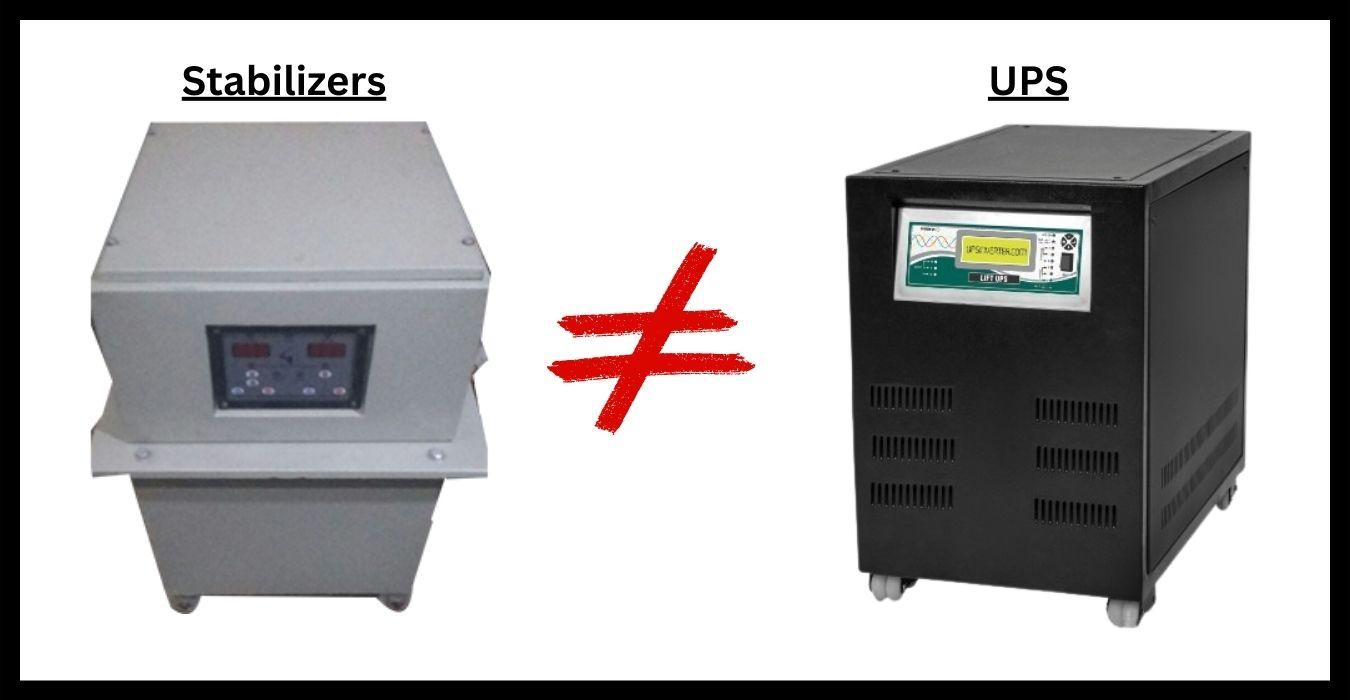
7 minutes, 18 seconds
-37 Views 0 Comments 0 Likes 0 Reviews
Electricity quality isn’t just some technical thing—it affects almost everything people do, for their business or personal reasons. Your appliances suffer when the voltage fluctuates or when the power abruptly stops. They wear out faster, stop working, and honestly, it can mess up your whole routine. That’s why voltage stabilizers and UPS systems are so common. They both guard your electronics, but they do it differently. Once you get how each one works, choosing the right one for your home feels way simpler.
A voltage stabilizer basically keeps the voltage steady before it reaches your equipment. A known one is the Servo Voltage Stabilizer, especially when you need accuracy in places with big or sensitive loads. Unlike regular stabilizers, the servo kind uses a motor-driven system to smooth out voltage swings, so it handles tough conditions better.
A UPS does something else. Its primary responsibility is to maintain operations in the event of a power outage. It recharges batteries and provides backup power in the event of blackouts or unexpected malfunctions. Stabilizers handle voltage problems, but UPS systems make sure there’s always power. That’s really what sets them apart—and it shapes where you’d want to use each one.
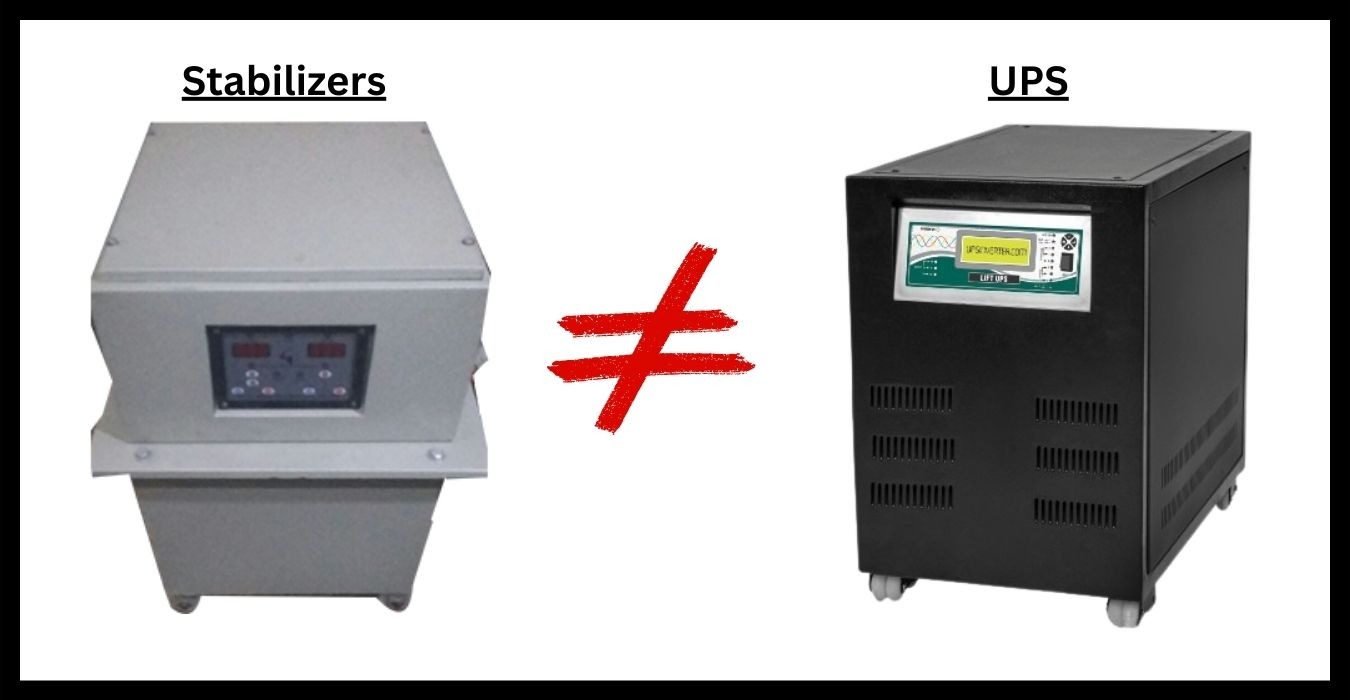
The choice between a voltage stabilizer and a UPS depends on the provision of whether to fix bad power or no power. A voltage stabilizer is like the filter analogy for water; it takes care of fluctuation- be it surge or sag- so that your fridge or AC does not burn out, but it will not keep them running when there is a blackout.
A UPS is like a backup water tank. It has a battery inside and as soon as the lights go out, it runs on battery giving you time to save work on a computer. Though a UPS gives better protection, it will cost more and the expense of batteries that need replacement every few years.
The other differences between servo voltage stabilizer and UPS are as follows:
Primary Job
- Voltage Stabilizer: Corrects high or low voltage fluctuations to maintain a steady flow.
- UPS: Provides immediate backup power during a total blackout or power failure.
Power Backup
- Voltage Stabilizer: None. It simply shuts off when the main power fails.
- UPS: Yes. It switches to internal battery power instantly to prevent data loss or equipment shutdown.
Internal Circuitry
- Voltage Stabilizer: Simple design utilizing transformers and servo motors.
- UPS: Complex system involving an inverter, battery, and rectifier.
Protection Level
- Voltage Stabilizer: Protects against high/low voltage and power surges.
- UPS: Comprehensive protection against fluctuations, blackouts, and electrical spikes.
Maintenance Requirements
- Voltage Stabilizer: Very low; requires almost zero maintenance over time.
- UPS: High; the internal battery typically needs replacement every 2–3 years.
Cost
- Voltage Stabilizer: Budget-friendly and cost-effective for large machinery.
- UPS: More expensive due to the battery and inverter technology.
Nowadays, servo voltage stabilizer manufacturers offer stabilizers with digital controllers, faster correction speeds, and improved efficiency. UPS systems have also become smarter – they feature better battery management, longer backup times, and real-time monitoring. All of this means they are more reliable and energy-efficient than older versions.
Key advancements include
- Microprocessor-based control systems
- Improved efficiency with reduced losses
- Faster response to voltage changes
- Compact and modular designs
- Enhanced safety and monitoring features
Stabilizers protect your fridge, AC and washing machine at home from voltage fluctuations. For your computer, Wi-Fi or security system to avert chaos when the power goes out and nothing just turns off. Using both together? It keeps your appliances safe and the day proceeding smoothly, no matter what’s going on with the electricity.
In commercial spaces such as offices, malls, and hospitals, stable voltage is essential for elevators, HVAC systems, and medical equipment. Industries rely heavily on stabilizers for CNC machines, manufacturing lines, and automation systems, where even minor voltage changes can cause major losses. UPS systems support servers, data centers, and emergency systems that cannot afford downtime.
This is where Gayatri Industry, known for single-phase and three-phase power-back up systems in India used globally, plays a significant role by offering solutions designed for both domestic and industrial demands.
Selecting between a stabilizer and a UPS depends on the problem you face most often—voltage variation or power failure. In many cases, using both together delivers the best results. But the thing to remember is that stabilizers are cheap but work when power is on. It will stabilize appliances well when power is on, not during power cuts.
Quick selection guide
- Choose a stabilizer for voltage fluctuation control
- Choose a UPS for backup during outages
- Use both for complete electrical protection
In advanced setups, the Servo Voltage stabilizer is preferred for its accuracy and durability, especially in industrial environments. Gayatri Industry continues to support global markets with reliable power solutions, helping users protect equipment, reduce downtime, and maintain consistent performance across residential and commercial sectors.
servo voltage stabilizer Servo Voltage Stabilizer in Delhi Servo Voltage Stabilizer Manufacturer in Delhi Servo Voltage Stabilizer Manufacturer Servo Voltage Stabilizer in Haridwar


