Notifications

2 minutes, 44 seconds
-34 Views 0 Comments 0 Likes 0 Reviews
The Saudi Arabia Desert Skyscraper Bird Migration issue is gaining global attention. This is due to the Kingdom's construction of The Line, a futuristic urban project that stretches 170 kilometers through the desert.
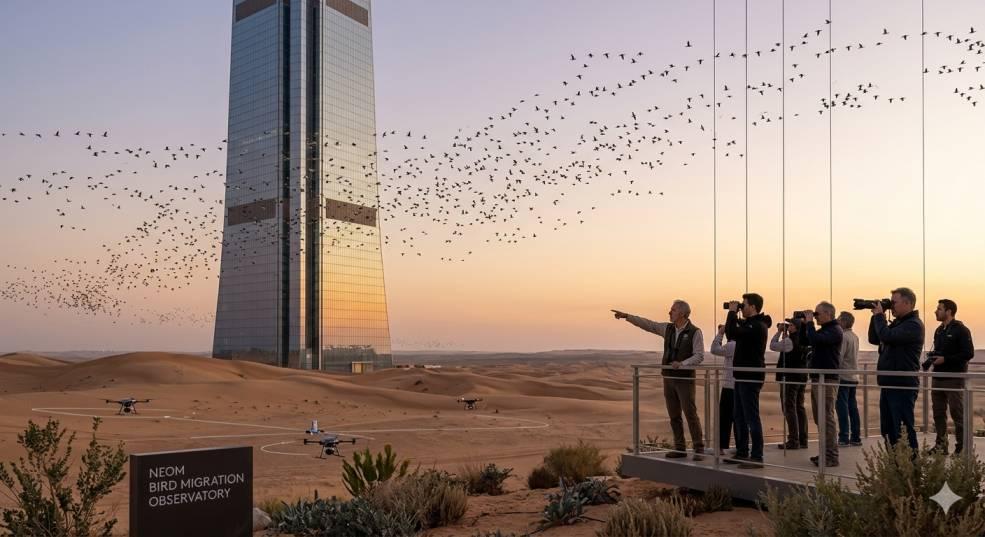
Experts warn that the Saudi Arabia Desert Skyscraper Bird Migration corridor may disrupt a major bird flyway. This could threaten millions of migratory birds.
Conservationists worry that the large glass buildings might confuse or trap birds. This makes bird migration in Saudi Arabia's desert skyscraper area a key environmental issue for the project.
Saudi Arabia sits along the African-Eurasian Flyway, a vital route used by over 300 species of migratory birds traveling between Europe, Asia, and Africa.
Every spring and autumn, birds cross vast deserts and stop at oases and wetlands to rest and refuel. Protecting migration paths is vital for biodiversity. Birds help with pollination, seed dispersal, and controlling insects.
The design of The Line — with mirrored towers and continuous glass facades — poses significant risks to migrating birds. Birds often mistake reflective surfaces for open sky, which can result in fatal collisions.
Nighttime artificial lighting can confuse nocturnal species. This increases the risks for bird migration in the Saudi Arabian Desert. Similar risks have been observed in urban centers worldwide, highlighting the importance of proactive measures.
Environmental experts and Saudi planners have discussed possible solutions to reduce the impact of The Line on migratory birds. Bird-friendly glass helps birds. Dimmed lights protect them during migration.
Real-time monitoring keeps key migration routes safe. Long-term planning and clear ecological assessments are key. They help ensure that development matches conservation goals.
The Saudi Arabia Desert Skyscraper Bird Migration challenge shows the need to balance city growth with nature protection. The Line shows a vision of future living. It also reminds us that big projects need to consider their ecological effects to safeguard global biodiversity.


