Notifications

5 minutes, 0 seconds
-69 Views 0 Comments 0 Likes 0 Reviews
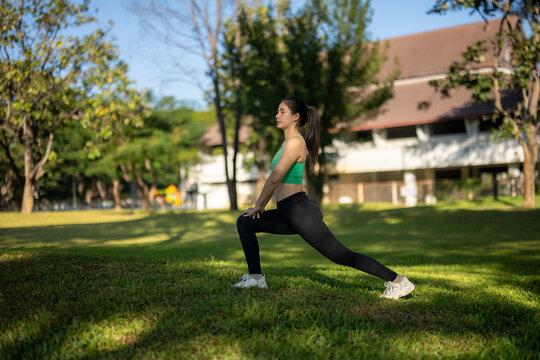
The development of functional athletic movement often depends on exercises that mirror real-world demands rather than isolating muscles in rigid patterns. Among these, unilateral movements play a significant role in improving balance, coordination, and joint stability. The lunge is a prime example of a movement that challenges the body to work across multiple planes while maintaining control. By stepping forward, backward, or laterally, the body must stabilize through the hips, knees, and core, making the lunge a practical foundation for improving how athletes move in dynamic environments.
One of the key benefits of incorporating the lunge into training is the emphasis on unilateral strength. Unlike bilateral movements, which distribute load evenly across both sides, unilateral exercises require each leg to work independently. This highlights and corrects imbalances that might otherwise go unnoticed.
When performing a lunge, the stabilizing muscles of the hips and core are activated to maintain alignment. This control translates directly into better posture and reduced risk of injury during sports or daily activities. Over time, consistent practice enhances proprioception, allowing the body to better understand its position in space. This awareness is essential for athletes who rely on quick adjustments and reactive movement patterns.
Functional athletic movement is not only about strength but also about mobility. The lunge encourages a full range of motion through the hip flexors, quadriceps, and glutes. As the body lowers and rises, these muscle groups lengthen and contract in a coordinated manner, promoting flexibility alongside strength.
A properly executed lunge also challenges ankle dorsiflexion and knee alignment. These subtle demands improve joint mechanics, which can contribute to smoother transitions between movements such as sprinting, cutting, or jumping. With consistent training, athletes often experience improved stride efficiency and greater ease when shifting directions.
Coordination is a critical component of athletic performance, and the lunge reinforces this through controlled, repeatable patterns. Each repetition requires synchronization between the upper and lower body, particularly when variations involve arm positioning or rotational elements.
By integrating the lunge into a broader training program, individuals can develop more efficient movement habits. These patterns carry over into complex actions like lunging for a ball, decelerating after a sprint, or maintaining balance under load. The ability to coordinate multiple joints and muscle groups simultaneously is what distinguishes functional strength from isolated strength.
Beyond athletic settings, the principles reinforced by the lunge are evident in daily activities such as climbing stairs, lifting objects, or stepping over obstacles. These actions require stability, balance, and controlled force production, all of which are trained through repeated practice of the movement.
The lunge also encourages symmetrical development, helping the body avoid over-reliance on a dominant side. This balanced approach supports long-term joint health and contributes to more efficient biomechanics overall. As a result, individuals may find that everyday movements feel more natural and less taxing.
Incorporating the lunge into a routine does not require complex equipment or environments. Its adaptability allows it to be performed in various directions and tempos, each offering slightly different demands on coordination and control. Forward, reverse, and lateral variations all challenge the body in unique ways, reinforcing adaptable movement strategies.
When practiced consistently, the lunge becomes more than just an exercise, it serves as a fundamental movement pattern that supports agility, stability, and functional strength. By focusing on quality of movement rather than quantity, individuals can gradually refine their mechanics and build a strong foundation for both athletic performance and everyday activities.


