Notifications

9 minutes, 20 seconds
-401 Views 0 Comments 0 Likes 0 Reviews
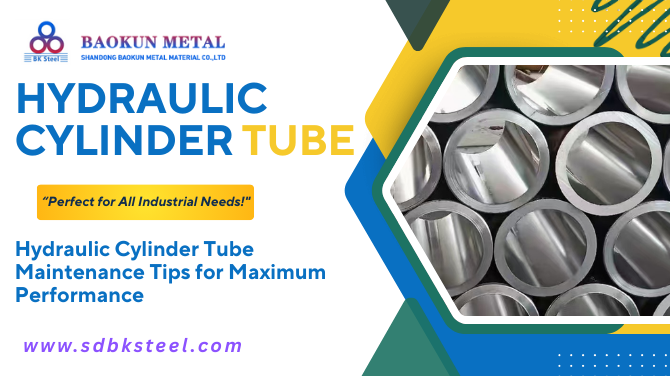
Hydraulic systems are the backbone of modern industrial, agricultural, and mobile equipment, and at the heart of those systems lies a deceptively simple — yet critical — component: the hydraulic cylinder tube. Whether you operate heavy construction machinery, precision manufacturing presses, or mobile lifting systems, the condition of the Hydraulic Cylinder Tube directly affects system efficiency, safety, and life‑cycle cost. Therefore, routine maintenance and correct handling are not optional; they are essential.
In this introduction, we provide practical, actionable guidance that helps extend service life, reduce downtime, and maximize performance — all while drawing on industry best practices and the product expertise at Shandong Baokun Metal Material Co., Ltd.
First, poorly maintained cylinder tubes lead to seal failure, internal scoring, and accelerated wear, which in turn cause hydraulic fluid contamination and unpredictable machine behaviour. Consequently, what starts as a small scrape or a bit of corrosion can escalate into large repair bills and lengthy downtime.
Moreover, degraded tube surfaces increase friction, reduce energy efficiency, and may create safety risks in load‑bearing applications. Therefore, proactive maintenance preserves not only equipment performance but also operational continuity and crew safety.
Common failure modes to watch for:
Before diving into tips, it’s useful to recognize the typical failure mechanisms that affect hydraulic cylinder tubes:
Key maintenance principles and practical tips:
Below are focused maintenance actions that yield measurable improvements in tube longevity and cylinder performance. For best results, implement these practices as part of a documented preventive maintenance program.
Conduct regular visual inspections
Daily or pre‑shift visual checks help catch leaks, surface damage, or seal blowouts early. In addition, a quick rod wipe test can reveal contamination.
Subsequently, schedule more thorough inspections weekly or monthly, depending on operating intensity.
Keep the tube and rod surfaces clean:
Use lint‑free cloths and fluids compatible with your hydraulic system to remove grit and contaminants. Avoid abrasive cleaning tools that can alter surface finish.
Furthermore, when cleaning, ensure flushing of lines and accumulators to prevent recontamination.
Maintain fluid cleanliness and filtration
Clean hydraulic fluid dramatically reduces abrasive wear on the Hydraulic Cylinder Tube and seals. Therefore, maintain filtration elements, check particle counts, and prevent water ingress.
Also, replace filters and perform oil analysis on a routine schedule tied to machine hours.
Protect surfaces from corrosion
Apply rust inhibitors after cleaning, and use protective sleeves or rod boots in corrosive environments. Similarly, for outdoor storage or transport, wrap tubes in corrosion‑inhibiting film and keep them dry.
If working in marine or highly humid environments, increase inspection frequency and use corrosion‑resistant coatings or materials.
Control alignment and loading
Improper alignment causes uneven wall stress and premature wear. Consequently, during assembly, verify proper mounting, parallelism, and rod end geometry.
Additionally, avoid side loads and shock loading; if unavoidable, design appropriate guides or bearings to transfer lateral forces off the tube.
Seal maintenance and timely replacement
Worn seals scratch rod surfaces and accelerate tube wear. Thus, schedule seal replacement as a preventive measure rather than reactively after leaks occur.
Moreover, use high‑quality seal kits specified for your operating temperature and fluid type.
Use the right repair strategy
Minor surface scratches may be polished, and moderate wear can sometimes be remedied by sleeving or re‑chroming. However, extensive pitting, dents, or structural cracks usually require replacement.
Therefore, evaluate repairs against replacement costs, expected future loads, and safety considerations.
Employ measurement and non‑destructive testing
Periodically measure bore concentricity, runout, and wall thickness with appropriate gauges. Likewise, use NDT techniques such as ultrasonic thickness testing or dye penetrant inspection for crack detection when warranted.
As a result, these diagnostics allow data‑driven decisions on repair intervals and end‑of‑life replacement.
Proper storage and handling
Store tubes horizontally on padded supports and avoid stacking heavy loads. In addition, control humidity and temperature to reduce corrosion risk.
During transport, secure tubes to prevent bending or impact damage and protect ends with caps.
Document maintenance and train staff
Keep records of inspections, repairs, and operating hours to identify wear trends. Meanwhile, ensure personnel are trained in correct procedures for assembly, cleaning, and inspection to prevent avoidable damage.
Conclusion
In short, hydraulic cylinder tube longevity and performance come down to consistent, thoughtful care. By implementing a combination of visual checks, fluid cleanliness practices, mechanical alignment verification, protective measures, and targeted repairs, operators can significantly extend tube life and optimize system performance. As a trusted supplier, Shandong Baokun Metal Material Co. Ltd is committed to supporting customers with high‑quality Hydraulic Cylinder Tube products and guidance to ensure reliable operation in the field. In the full blog series, we will dive deeper into diagnostic techniques, re‑chroming procedures, and material selection to help you make the best maintenance decisions for your fleet.

Q: How often should I inspect hydraulic cylinder tubes?
A: Perform quick visual inspections daily or before shifts, with more detailed checks weekly or monthly, depending on duty cycle. For heavy or critical applications, schedule periodic NDT inspections annually or by a defined number of operating hours.
Q: What are the first signs that a tube needs attention?
A: Look for visible scratches or scoring, fluid leaks around seals, corrosion or pitting, and reduced cylinder performance (stickiness or slowdown). Any of these warrants immediate evaluation.
Q: Can small surface scratches be repaired?
A: Yes. Minor scratches can often be smoothed and polished, and moderate damage may be remedied by re‑chroming or sleeving. Nevertheless, assess the extent of damage and the remaining service life before deciding.
Q: How important is hydraulic fluid cleanliness?
A: Extremely important. Contaminated fluid accelerates abrasive wear of the tube and seals. Therefore, maintain filtration, monitor particle counts, and control moisture to protect tube surfaces.
Q: When should a tube be replaced rather than repaired?
A: Replace when there are deep pits, large dents, cracks, or significant wall thinning. Ultimately, replacement is a safer and often more cost‑effective option when structural integrity is compromised.
Q: What storage practices minimize damage?
A: Store tubes horizontally on padded racks, keep them wrapped in protective film, control humidity, and avoid stacking. In addition, use end caps to prevent internal contamination.
Q: Does Shandong Baokun Metal Material Co. Ltd offer technical support or custom tubes?
A: Yes — Shandong Baokun Metal Material Co. Ltd supplies high‑quality hydraulic cylinder tubes and can advise on material selection, custom dimensions, and best practices. Contact our team to discuss specifications and support options.


