Notifications

8 minutes, 17 seconds
-38 Views 0 Comments 0 Likes 0 Reviews
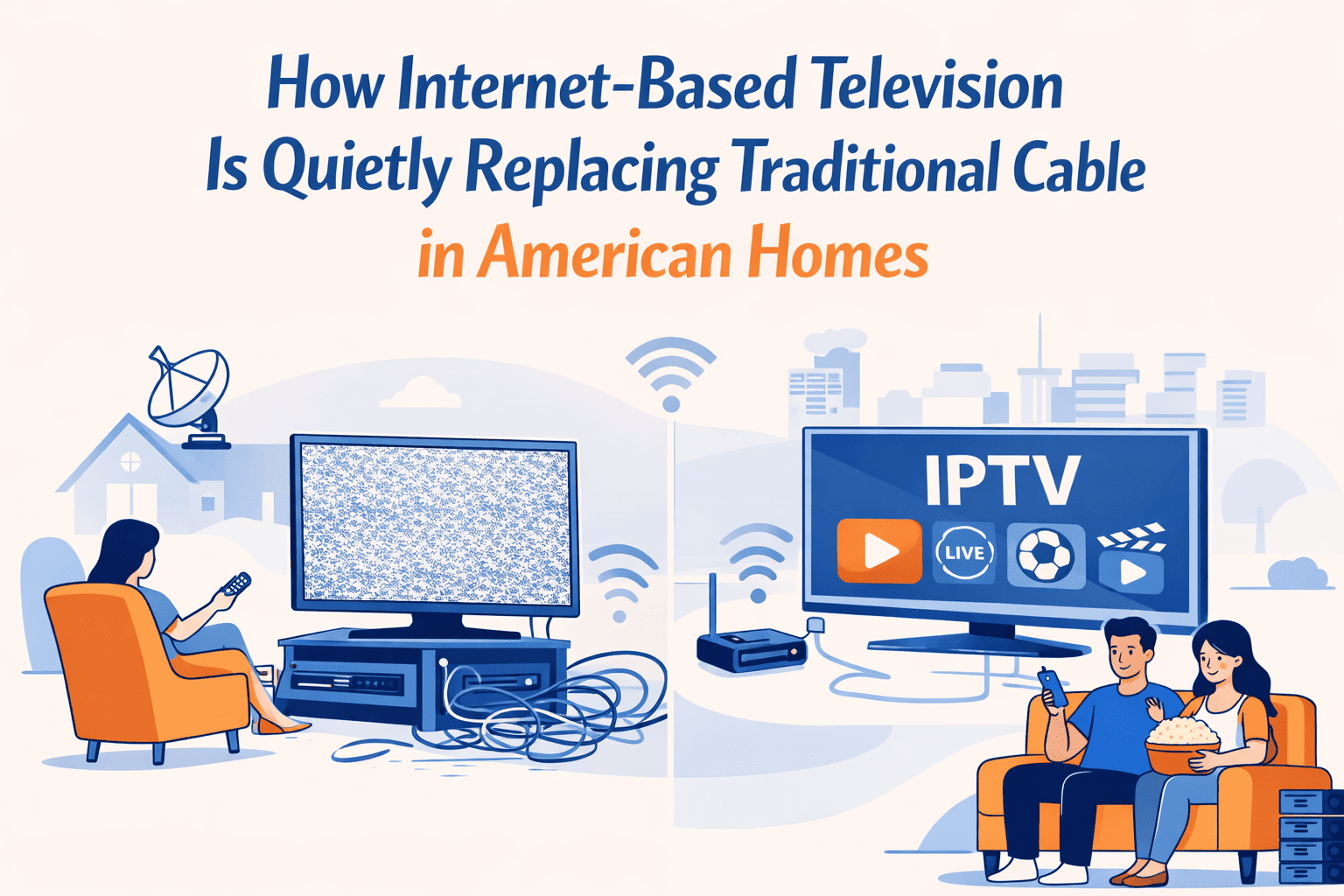
For decades, Americans had two choices when it came to watching television — cable or satellite. Both were expensive, both locked you into lengthy contracts, and both forced you to pay for hundreds of channels you never watched. Today, a third option has emerged, and it is rapidly changing the way households consume entertainment across the country.
Internet Protocol Television — more commonly known as IPTV — is not a trend. It is a fundamental shift in how television content is delivered, and millions of viewers are making the switch every single year.
Traditional cable television works by transmitting signals through physical coaxial cables buried underground or strung along utility poles. Satellite TV beams those signals from space. Both methods are infrastructure-heavy, expensive to maintain, and geographically limited.
IPTV works differently. Instead of relying on cables or satellites, it delivers television content through your existing broadband internet connection. When you press play on a channel or a movie, the content is sent to your device in small data packets — the same way a website loads in your browser or a song streams through your headphones.
This approach has three major advantages. First, it removes the need for dedicated physical infrastructure at your home. Second, it gives providers the ability to offer an almost unlimited number of channels and on-demand titles without the bandwidth constraints of traditional broadcasting. Third, it puts the viewer in control — you watch what you want, when you want, on whichever device suits you.
One of the most common misconceptions about IPTV is that it only offers a limited selection of channels. In reality, a quality iptv service typically provides access to a far wider range of content than any standard cable package.
This includes:
For households with diverse viewing tastes — whether that means English-language primetime shows, international news, or live sporting events — IPTV covers all of it under a single subscription.
Another major advantage of IPTV over traditional cable is device flexibility. Cable television ties you to a physical set-top box connected to a specific television. IPTV has no such limitation.
You can access IPTV content on:
This means you are not limited to watching in one room. Family members can watch different content on different devices simultaneously, without any additional hardware installation required.
Not all IPTV providers are created equal. As the market has grown, so has the number of services available — which means choosing the right one requires some research. Here are the key factors worth evaluating before committing to any subscription:
Channel count and variety — Look for a provider that offers a comprehensive lineup covering your preferred genres, sports leagues, and any international or language-specific channels your household needs.
Streaming quality — A good provider should offer HD and Full HD streams as standard, with 4K availability for supported content and devices.
Reliability and uptime — Buffering and downtime are the most common complaints about low-quality IPTV services. Choose a provider with a proven track record of stable, consistent streams.
Device compatibility — Confirm the service works on all the devices your household uses before subscribing.
Customer support — Access to responsive customer support is particularly important for first-time IPTV users who may need help with setup or troubleshooting.
Trial availability — Reputable providers allow you to test the service before you pay. If a provider does not offer any trial period, that is often a warning sign.
Speaking of trials — if you are new to IPTV and want to experience a large-scale service without any financial commitment, an iptv free trial is always the smartest first step. It gives you hands-on experience with the channel quality, streaming performance, and content library before you decide whether the service is right for you.
Absolutely. While the technology behind IPTV is sophisticated, the user experience is designed to be simple. Most providers offer straightforward setup guides for every supported device, and the interface is generally no more complicated than navigating Netflix or any other streaming platform.
For beginners, the recommended approach is:
Most users find the transition from cable to IPTV straightforward, and the cost savings alone make the switch worthwhile for the majority of households.
Internet-based television is no longer a niche alternative to cable — it is a mainstream choice that delivers more content, more flexibility, and significantly lower costs than traditional broadcasting. Whether you are a sports enthusiast, a movie lover, or simply a household looking to reduce its monthly entertainment bill, IPTV offers a compelling solution.
The best way to understand what IPTV can offer your household is to experience it directly. Research your options, take advantage of available trial periods, and make an informed decision based on your own viewing habits and needs.
iptv service iptv free trial iptv provider usa internet protocol television