Notifications

8 minutes, 33 seconds
-7 Views 0 Comments 0 Likes 0 Reviews
Choosing a fence is easier when you focus on purpose, material, and local rules. This complete guide walks you through privacy, security, style, maintenance, and lifespan so you can make an informed choice for your Perth home and outdoor space.
Most Perth homes use timber, vinyl (uPVC), aluminium, steel, composite, or chain link. Each material balances privacy, security, upkeep, lifespan, and cost differently.
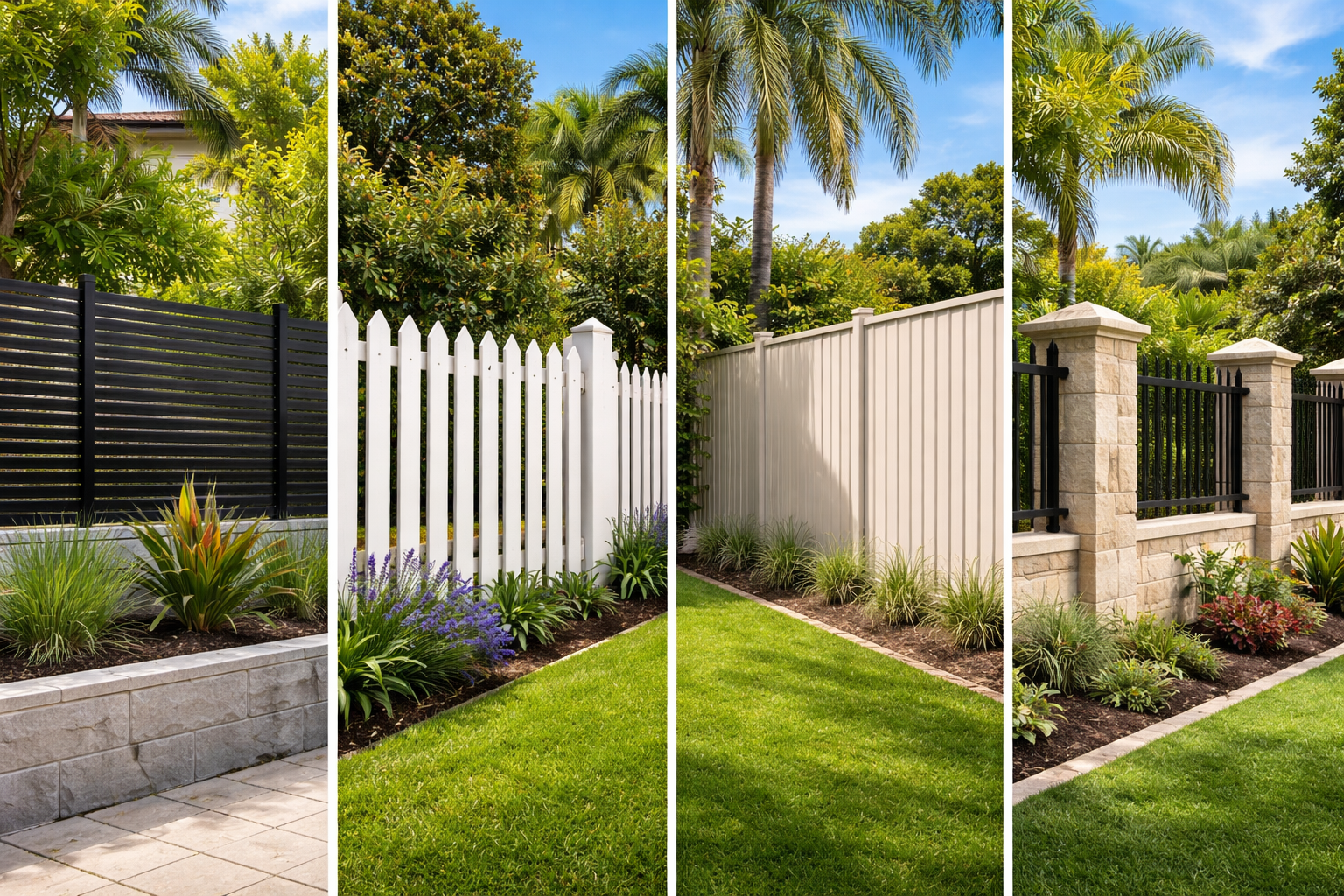
If you want boundary fencing that blocks prying eyes, solid panels such as steel or composite create a strong visual barrier while keeping clean lines. Timber fencing offers traditional charm and warmth for garden fencing and front fences, but it needs periodic repainting or oiling to maintain its look. Vinyl (uPVC) suits homeowners who prioritise low maintenance, though colours and profiles are more limited.
Aluminium slat fencing allows horizontal or vertical slats with adjustable gaps, giving you control over airflow and privacy. Steel fencing appears in two main forms in Perth: Colorbond steel with solid infill sheets for privacy, and tubular steel with vertical bars for enhanced security. Composite boards combine recycled materials with fibre-reinforced cores for a stable, colourfast surface. Chain link and wire systems are durable and budget-friendly where privacy is not the main concern.
If privacy is your priority, Colorbond fencing is often a popular low-maintenance option that complements modern homes.
Solid panels are best for privacy, climb-resistant bars are ideal for security, and matching the material to your home’s façade enhances street appeal.
For privacy, choose fencing with minimal gaps. Solid steel panels, composite boards, and tightly spaced slats shield patios, pool areas, and living spaces from neighbours.
For security, tubular aluminium steel fencing with closer post spacing and secure locking hardware reduces climbing opportunities while maintaining an attractive look.
For aesthetics, align your fence design with your home’s architecture. Vertical slats and shadowline steel suit contemporary homes, while picket fencing or capped timber palings complement traditional styles.
Front fences typically range between 1.2m and 1.5m to maintain safe sightlines. Side and rear fences are commonly 1.8m for privacy. Pool fencing must be at least 1.2m high and meet strict compliance rules.
Always check local council regulations before building. Corner blocks and driveways have visibility requirements. On sloping sites, stepped fencing maintains consistent height along boundaries without awkward transitions.
In coastal Perth suburbs, powder-coated aluminium or Colorbond steel with marine-grade fixings performs well against corrosion. In bush or rural areas, steel posts with metal or composite infills offer strength and fire resistance. In high-rainfall or shaded areas, composite and steel resist swelling and rot better than untreated timber.
Durability also depends on installation quality, correct post spacing, and proper footings.
Colorbond and powder-coated aluminium require only occasional washing. Composite boards resist fading without repainting. Chain link is durable with minimal upkeep where privacy is not essential.
Timber provides natural beauty but needs ongoing care, especially in areas exposed to harsh sun or irrigation overspray. If you prefer minimal maintenance, smooth metal or composite finishes are often the easiest to manage long term.
Timber
✔ Warm, natural look
✔ Highly customisable
✖ Requires ongoing maintenance
Vinyl (uPVC)
✔ Low maintenance
✔ Clean, modern appearance
✖ Limited design flexibility
Aluminium
✔ Lightweight and corrosion-resistant
✔ Ideal for coastal and pool areas
✖ Less solid privacy unless slatted closely
Your choice should balance appearance, budget, and how much time you’re willing to invest in upkeep.
Modern homes pair well with vertical slats, minimalist steel panels, or composite boards in neutral tones.
Traditional homes suit timber pickets, decorative tubular steel, or capped palings.
Farmhouse or coastal designs often combine horizontal slats or post-and-rail styles with wire infill for a relaxed look.
Matching fence colours with window frames, gutters, or roofing creates a cohesive street presence.
Yes. You should confirm maximum heights, approved materials, colour restrictions, and pool compliance requirements before installation.
Estate covenants may specify fence styles. Heritage areas often require particular front boundary designs. If replacing a shared boundary fence, written neighbour agreement helps avoid disputes.
In many cases, yes. A boundary survey ensures accurate placement. Permits may be required if your fence exceeds height limits or is near a corner lot. Pool fencing must strictly meet WA compliance standards.
A short planning phase prevents costly adjustments later.
A well-designed fence enhances curb appeal and increases perceived privacy and security. Buyers appreciate tidy lines, quality materials, and matching gates. Damaged or leaning fences can reduce first impressions, so timely repairs protect value.
Absolutely. Proper gap spacing, bottom clearances, and secure latches prevent pets from escaping. Pool fencing must include compliant heights, self-closing gates, and non-climbable zones to meet WA safety regulations.
Safety should always come before style.
In windy areas, use stronger posts, deeper footings, and slatted or vented panels to reduce pressure. On sloped blocks, stepped fencing maintains visual consistency and compliance.
Avoid attaching fencing directly to retaining walls unless engineered to support it.
Timber: 10–20 years with maintenance
Colorbond steel: 20–30 years in suburban conditions
Aluminium and composite: 20–30 years with minimal upkeep
Chain link: 15–25 years depending on coating and exposure
Installation quality significantly impacts lifespan.
Yes. Tall, solid panels reduce road noise more effectively than open styles. Planting dense hedges alongside solid fencing can further improve sound buffering while enhancing visual appeal.
Choosing the right fence starts with understanding your purpose — privacy, security, aesthetics, or compliance. Then consider materials suited to Perth’s climate and your maintenance expectations. A well-planned fence protects pets, enhances outdoor living, boosts curb appeal, and ensures peace of mind for years to come.