Notifications

7 minutes, 45 seconds
-31 Views 0 Comments 0 Likes 0 Reviews
The world of IT recruitment moves faster than almost any other industry. With new programming languages, frameworks, and specialised roles popping up every day, hiring teams are often buried under a mountain of resumes. In the past, recruiters had to manually sort through hundreds of applications for a single software developer role—a process that was not only slow but also prone to human error.
Today, technology is stepping in to solve the very problems it created. AI-powered Applicant Tracking Systems (ATS) are changing the way companies find, evaluate, and hire tech talent. By using artificial intelligence to handle the heavy lifting, businesses are making their hiring process smarter, faster, and much more human-centric.
At its core, an Applicant Tracking System is a digital filing cabinet for job applications. However, when you add artificial intelligence into the mix, it becomes much more than just storage. An AI-driven ATS doesn't just hold resumes; it reads them, understands the context of a candidate's experience, and even predicts how well they might fit a specific role.
Instead of just searching for simple keywords like "Java" or "Python," AI looks at the depth of a candidate's career, their skills, and how their past projects align with the current job description. This allows recruiters to move away from "keyword matching" and toward "talent matching."
In the IT world, skills are specific and technical. A recruiter might not always be an expert in the difference between two similar coding libraries, but an AI system can be trained to recognise these nuances.
AI helps IT companies by identifying "passive" candidates who might be a great fit but haven't applied yet. It can also analyse the skills of current employees to help define what a successful new hire should look like. By providing data-driven insights, AI ensures that the recruitment team isn't just guessing who the best candidate might be; they are making decisions based on evidence.
One of the biggest hurdles for HR teams is the sheer volume of administrative work. Repetitive tasks like scheduling interviews, sending follow-up emails, and updating candidate statuses can take up hours of a recruiter's day.
Automation handles these chores instantly. When a candidate progresses to the next stage, the system can automatically send them a calendar link to book an interview. This speed is vital in the tech industry, where top-tier developers are often off the market within days. By reducing "time-to-hire," companies can snap up the best talent before their competitors do.
Resume screening is often the most tedious part of the job. For a single IT opening, a company might receive 500 applications, but only 10 might actually have the required specialised experience.
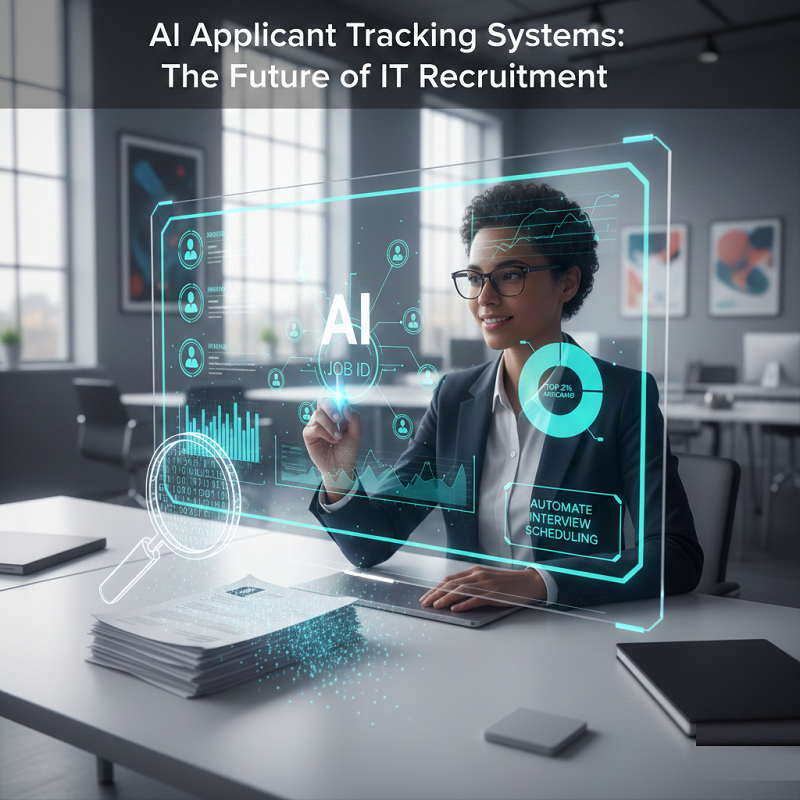
AI tools can scan these resumes in seconds. They rank candidates based on relevancy, allowing recruiters to focus their energy on the top 2% of applicants. Interestingly, many small businesses and start-ups are now beginning to explore these benefits by utilising free AI applicant tracking software to streamline their early-stage hiring without a massive upfront investment. This levelled playing field allows smaller teams to compete with tech giants for the same high-quality talent.
Human beings, despite their best intentions, often have unconscious biases. We might favour a candidate because they went to the same university we did or because we like their previous employer. AI can be programmed to ignore these personal details and focus strictly on the skills and qualifications that matter.
By focusing on objective data, AI helps build more diverse and capable IT teams. It ensures that the person hired is truly the most qualified for the technical demands of the role. Additionally, AI can manage candidate communication more effectively, providing feedback and updates so that applicants aren't left in the dark—a common complaint in the tech world.
Efficiency isn't just about speed; it's about quality. A "bad hire" in a technical role can be incredibly expensive and disruptive to a project's timeline. AI helps improve the "quality of hire" by using predictive analytics.
By comparing a candidate’s profile to the profiles of the company's top-performing engineers, the system can identify patterns of success. This means the people who make it to the interview stage are much more likely to be a long-term fit for the company culture and the technical requirements of the team.
As we look ahead, the role of AI in hiring will only continue to grow. We are already seeing the rise of AI chatbots that can conduct initial technical screenings and virtual assistants that help manage the entire onboarding process.
However, this doesn't mean recruiters are becoming obsolete. On the contrary, by using tools like free AI applicant tracking software, recruiters are freed from the "robotic" parts of their jobs. This allows them to spend more time doing what humans do best: building relationships, negotiating offers, and ensuring that every new hire feels welcomed and valued.
AI Applicant Tracking Systems are no longer a "futuristic" concept—they are a necessity for any IT company that wants to stay competitive. By automating the boring parts of recruitment and providing deep insights into candidate skills, these tools allow HR teams to work with precision and speed. The future of IT recruitment is one where technology handles the data, so people can focus on the people.


