Notifications

9 minutes, 49 seconds
-34 Views 0 Comments 0 Likes 0 Reviews
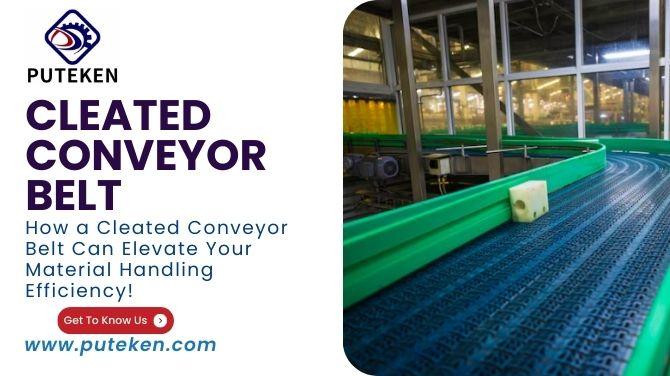
In today’s fast-paced industrial world, where efficiency, adaptability, and reduced operational costs are critical to maintaining a competitive edge, one component of material handling systems has proven to be a game-changer—the Cleated Conveyor Belt. Whether you’re moving bulk materials uphill, handling fragile items in inclined sections, or requiring separation between conveyed products, a cleated belt offers optimized transport solutions that standard flat belts simply can’t match.
At Shanghai Puteken Transmission System Co., Ltd., we specialize in designing and manufacturing advanced conveyor belt systems catered to the unique demands of different industries. Among our top-performing belt types, the Cleated Conveyor Belt stands out for its ability to solve traditional conveying problems—especially in applications where vertical movement, product alignment, or spillage control is essential. These belts are engineered not just to move materials, but to streamline performance, ensure product integrity, and significantly improve throughput rates.
Unlike traditional belts that may allow slippage, sagging, or overlapping during transit, cleated conveyor belts incorporate a series of strategically positioned cleats (or raised sections) that maintain product alignment and prevent backward movement. The result is a smooth, controlled, and highly efficient conveying process that reduces waste, energy usage, and mechanical load.
A Cleated Conveyor Belt is a type of conveyor system belt that features raised sections or “cleats”. These cleats are strategically spaced and designed in various shapes and sizes to help carry materials more effectively, especially when the belt is angled or inclined. The cleats act as “barriers” or “pockets,” preventing materials from sliding backward during elevation and allowing for better separation or product spacing during transport.
These belts are critical in systems requiring controlled incline movement, batch handling, or precise indexing—functions where traditional smooth belts often fail due to slippage or misalignment.
At Shanghai Puteken Transmission System Co., Ltd., we help our customers choose from a variety of cleated belt designs, depending on the material, elevation, spacing requirement, and load type.
1. T-Cleat
Straight vertical cleat (90° angle)
Offers strong retention and support
Used in steep incline conveying
2. L-Cleat
Inclined cleat (usually 60°)
Ideal for gentle conveying of fragile materials
Lower resistance and impact force
3. V-Cleat
V-shaped or herringbone pattern cleats
Great for alignment on curves and high-speed conveyors
Often used in food processing for directional stability
4. Paddle Cleats
Wider and taller cleats
Excellent for large bulk materials like coal, grains, and aggregates
Also suitable for inclined bucket-type transfer systems
5. Custom Molded Cleats
Tailored designs with variable height, spacing, and shapes
Often used in packaging, pharmaceuticals, or light electronics
Each cleat has a specific function that can dramatically affect your conveying system efficiency, depending on your unique needs and environmental conditions.
The strength of a Cleated Conveyor Belt lies in its cross-industry versatility. Companies that shift to cleated belts often report higher throughput, reduced material loss, and less maintenance due to belt redesigns that better suit their output needs.
1. Agriculture and Grain Processing
Elevating and separating freshly harvested crops
Carrying grains into silos or hoppers
Conveying dusty/agglomerated items without slippage
2. Food and Beverage Industry
Gentle incline transport for packaged foods
Movement of sticky or fragile items (cookies, baked goods, fruits)
FDA- or EU-compliant PU belts for hygienic safety
3. Mining and Quarrying
Transport of rocks, ores, slate, and gravel
Steep incline bulk material transport
High-durability cleats for dusty, abrasive environments
4. Recycling and Waste Management
Moving shredded plastics and metals
Material separation for sorting conveyor
Reduced fallback and blockages during elevation
5. Manufacturing & Packaging
Indexing items into separate packaging lines
Keeping products uniformly spaced (e.g., cartons, bottles)
Automated part feeders where product orientation matters
6. Logistics and Warehousing
In-sorting and out-sorting mechanisms
Incline conveyors to mezzanines or upper levels
Anti-slip solutions for boxed goods in high-speed systems
Whether it's a low-profile belt for electronics or a high-impact industrial-grade belt for a mining conveyor, cleated belts offer unmatched grip and efficient handling.
Upgrading to a Cleated Conveyor Belt presents several tangible advantages for your operations:
1. Prevents Material Rollbacks
Cleats eliminate rollback issues on inclines—materials stay in place, which increases throughput and safety.
2. Increased Angle of Operation
Cleated belts allow steeper inclines (up to 45° or more in some cases), reducing conveyor footprint, saving floor space, and allowing vertical integration.
3. Better Product Spacing and Indexing
In processes requiring sensor interaction or labeling/splicing, cleats keep items perfectly spaced.
4. Minimized Spillage and Loss
Thanks to contained “pockets” created by cleats, loose material doesn’t spill, reducing cleanup and product loss.
5. Lower Maintenance
Fewer product jams, misalignments, or slippages reduce belt strain and wear on pulleys or motors.
In material handling systems where efficiency, accuracy, and vertical capability make all the difference, the Cleated Conveyor Belt has proven to be an essential upgrade. By securely transporting materials at various angles, reducing waste, and improving throughput, cleated belts can transform the productivity of your conveyor operations.
Q1: What’s the standard cleat height for incline conveying?
A: Standard cleat heights range between 20 mm to 100 mm, but we offer completely custom configurations based on your load dimensions and angle.
Q2: Can cleats be modular or replaceable?
A: Yes. Certain modular conveyor belts use snap-on or bolted cleats that are replaceable and customizable without changing the whole belt.
Q3: Are cleated conveyor belts suited for food-grade use?
A: Absolutely! We supply FDA- and EU-grade PU cleated belts specifically for washdown and food-handling systems in meat, bakery, or packaged products.
Q4: Can a cleated belt be used horizontally?
A: Yes. In horizontal conveying, cleats can act as spacing separators, helping in indexing, pick-and-place, or batching operations.
Q5: Will the cleats wear down quickly?
A: Not if the belt is matched well to the application. Our cleats are made from durable thermoplastic, rubber compounds, or reinforced PU, designed to last under constant use.
Q6: What belt speeds are supported for cleated belts?
A: Typically up to 1.5–2.0 meters/second, depending on cleat design and belt width. We can customize solutions for higher speeds upon request.
Q7: Can Shanghai Puteken custom-design cleated belts?
A: Yes! We offer custom cleat spacing, profiles, belt thickness, and joint types. We also integrate guiding systems, sidewalls, and backings as needed.


