Notifications

10 minutes, 13 seconds
-325 Views 0 Comments 0 Likes 0 Reviews
Securing a travel permit to a new destination can often feel like a puzzle, but for citizens of Madagascar looking to explore the heart of Africa, the DRC eVisa for Madagascar Citizens has streamlined the process with the Ordinary Flying eVisa.

As of 2025, the DRC remains a land of immense opportunity and natural wonder. Whether you are planning to witness the majestic mountain gorillas in Virunga, explore the urban sprawl of Kinshasa, or conduct business in the mineral-rich Katanga region, this comprehensive guide provides everything a Malagasy traveler needs to know.
Yes. Citizens of Madagascar are required to obtain a valid visa before entering the Democratic Republic of the Congo. While Madagascar and the DRC are both members of certain regional blocks, the DRC follows a strict principle of reciprocity. Currently, there is no visa-free agreement between the two nations, meaning the most efficient way to obtain entry is through the eVisa (Electronic Visa) system. This digital process eliminates the need to visit an embassy in person, which is particularly helpful as consular services can be limited.
The Ordinary Flying eVisa is an official digital authorization that allows travelers to fly into the DRC for tourism, business, or family visits. Unlike traditional paper visas, this is linked electronically to your passport. Once approved, you receive a PDF document that must be presented to immigration officers upon arrival at major international gateways, such as N’Djili International Airport (FIH) in Kinshasa or Goma International Airport (GOM).
The application process is designed to be user-friendly and can be completed in under 20 minutes:

Enter Information: Fill in your personal details exactly as they appear in your passport, including full name, birth date, and occupation.
Upload Documents: You will need to attach clear scans of your passport bio-page and a professional photo.
Payment: Pay the fees using a credit/debit card or supported digital payment methods.
Print & Travel: Once approved, the eVisa is sent via email.
Note: You must carry a physical printout; digital copies on phones are often not accepted by airline check-in counters.
To avoid delays, ensure your documents meet these essential DRC Visa Requirements.
Passport Copy: A clear scan of the bio-data page. Your passport must be valid for at least 6 months beyond your arrival date and have at least two blank pages.
Passport Photo: A recent color photograph (taken within the last 3 months) with a plain white background.
Motivation Letter: This is a crucial document. It should be addressed to the Director General of Migration (DGM), detailing your trip's purpose (e.g., "Visiting the Kahuzi-Biega National Park"), a basic itinerary, and your contact person or hotel in the DRC.
Madagascar citizens can choose a timeline that fits their urgency:
Normal Processing: 11 – 13 Working Days (Ideal for planned vacations).
Rush Processing: 8 – 11 Working Days (Balanced cost and speed).
Super Rush Processing: 5 – 8 Working Days (For emergency travel).
The standard eVisa for Madagascar citizens is typically issued for a stay of up to 30 days. It is generally a single-entry visa, meaning if you leave the DRC to visit a neighboring country like Rwanda or Zambia, you will need a new visa to re-enter. The visa itself usually has a 90-day validity window from the date of issue, within which you must enter the country.
If you are transiting through a DRC airport to a third country (e.g., flying from Antananarivo to Ethiopia via Kinshasa) and remain in the airport transit lounge for less than 24 hours, you generally do not need a visa. However, if your flight is the following day or you wish to stay at a hotel outside the airport, you must apply for a DRC Transit Visa, which is valid for a maximum of 3 days.
When boarding your flight from Madagascar, ensure you have:
The printed eVisa approval.
A Valid Passport.
A copy of your return or onward flight ticket.
Hotel reservation confirmation.
USD cash (the primary currency for tourists).
Safety in the DRC is a tale of two regions. Western and Southern cities like Kinshasa, Lubumbashi, and Matadi are generally safe for travelers who stay in central "communes" (neighborhoods) like Gombe. However, the Eastern provinces (North/South Kivu and Ituri) remain volatile due to local conflicts.
Travel Tip: Always check the latest security alerts before traveling. Avoid large public gatherings or political protests, which can escalate quickly.
Despite the country's size, mobile connectivity has improved. In 2025, over 30% of the population is online, and 4G is standard in major cities.
Local SIM Cards: You can buy a SIM from Vodacom, Airtel, or Orange at the airport.
Registration: You must present your passport to register the SIM.
Wi-Fi: High-speed Wi-Fi is common in hotels in Gombe, but speeds can drop during peak evening hours.
Alcohol is culturally accepted and widely sold. The DRC is famous for its large "Grandes" (750ml bottles) of local beer. While there are no religious prohibitions on alcohol, it is important to:
Avoid drinking in public spaces that aren't designated bars or restaurants.
Never drive after drinking; police checkpoints are frequent, and the legal limit is zero-tolerance.
Right-Hand Drive: Like Madagascar, traffic moves on the right.
International Permit: You need an International Driving Permit (IDP) alongside your Malagasy license.
Presidential Motorcades: If you hear sirens or see police stopping traffic, pull over immediately. It is illegal to move or take photos until the official motorcade has passed.
Checkpoints: Expect frequent stops by "Roulage" (traffic police). Always have your original documents ready.
Conditions: Roads are often in poor condition, and "roadblocks" are common. It is strongly advised to hire a local driver who understands the "informal" rules of the road and how to navigate checkpoints.
The DRC is strict about child safety to prevent trafficking. If traveling with minors:
A full birth certificate is required.
If only one parent is traveling, a notarized letter of consent from the absent parent is mandatory.
Children also require their own separate eVisa.
Taxis: Avoid "yellow taxis" shared with strangers. Instead, use hotel-recommended private taxis.
Ride-Hailing: Apps like Hoja or hotel-private cars are the safest options.
Public Buses: Generally overcrowded and not recommended for tourists due to safety and theft risks.
Official Motorcades: If you see a presidential motorcade, pull over immediately. It is illegal to take photos of these processions.
ATMs are found in all major cities, particularly at banks like Rawbank or Equity BCDC.
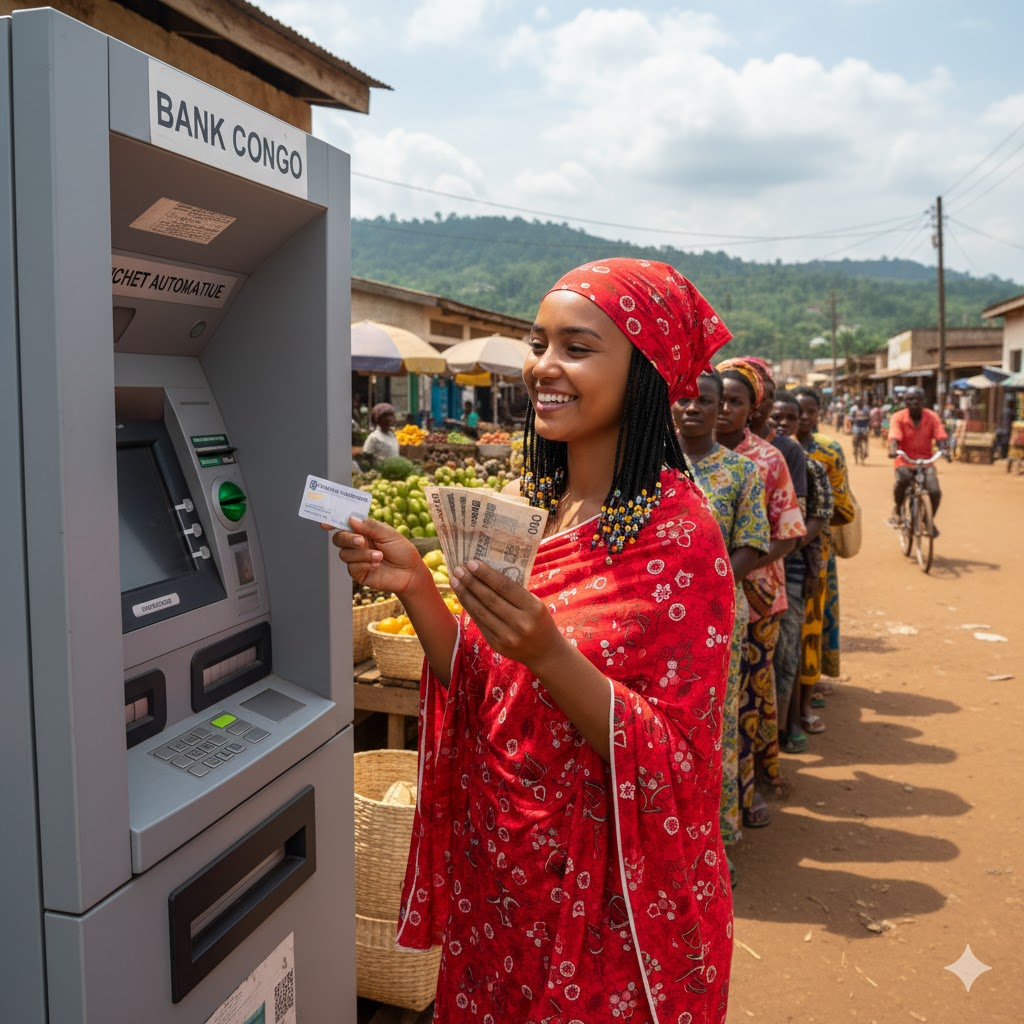
Currency: ATMs often give you a choice between USD and Congolese Francs (CDF).
Condition of Cash: If bringing USD from Madagascar, the bills must be pristine—no tears, marks, or folds. Bills printed before 2006 are often rejected.


