Notifications

9 minutes, 59 seconds
-592 Views 0 Comments 0 Likes 0 Reviews
In an era where manufacturing efficiency and precision are paramount, the ability to streamline motion control operations is critical to staying competitive. Whether you’re automating simple linear movements or synchronizing complex pick-and-place tasks, having the right single axis controller is the foundation for building reliable, high-performance systems.
At SilverCNC, we specialize in developing motion control solutions tailored for modern automation demands. From CNC machines to assembly lines and robotic systems, our single axis controllers empower industries to simplify control architecture, reduce operational downtime, and increase throughput.
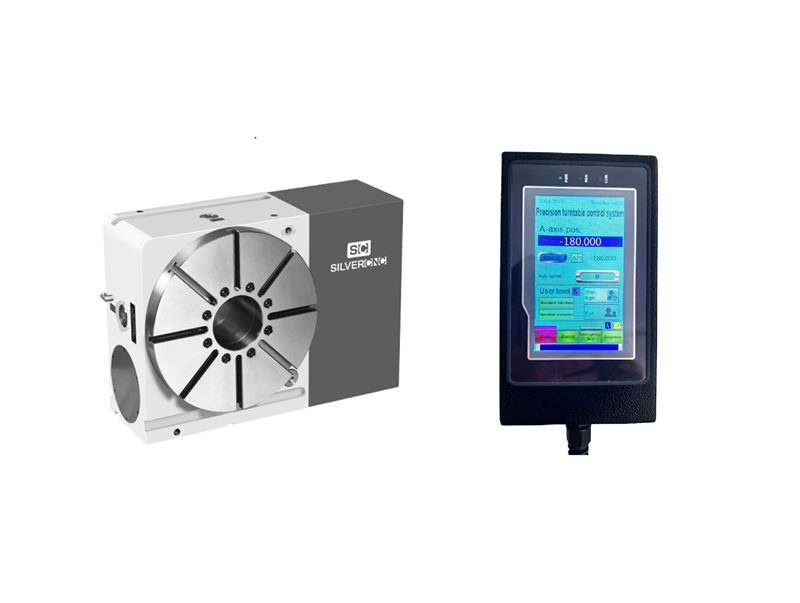
To put it simply, a single axis controller is a control device used to manage movement along one directional path—typically linear (X, Y, or Z) or rotary. It integrates functions like acceleration, velocity, deceleration, positioning, and feedback for actuators such as motors or linear stages. These controllers are central in applications like packaging, laser engraving, pick-and-place systems, CNC tool changers, and inspection processes.
Because as automation becomes more complex, achieving consistency, scalability, and speed requires more than just powerful hardware—it demands precise control. Selecting the wrong controller can lead to synchronization errors, inefficient motion profiles, increased wear on mechanical components, and even costly system downtime.
A single axis controller is an electronic device that governs the motion of a machine component along one axis—linear or rotary. It controls parameters such as:
Unlike multi-axis controllers, which manage movement on multiple paths simultaneously, single axis controllers are designed for focused motion control—making them ideal for applications where precision along one axis is the primary objective.
In many applications, these controllers are integrated with:
From standalone tasks to broader motion systems, single axis controllers are incredibly versatile, powering automation across industries such as:
In a CNC machining center, a single axis controller can control the tool magazine's translational or rotary movement during tool changes, ensuring fast and accurate operation without manual intervention.
Single axis motion is commonly used in vertical or horizontal movement of robotic arms or gantry systems for loading/unloading components on assembly lines. These controllers optimize speed and repeatability.
Automated transfer lines often require controlled linear movement—such as indexing parts or pallets. A single axis controller provides the precise control necessary to reduce wear and increase throughput.
Labeling, sealing, and box-forming systems require rapid, repeatable movements. Controllers ensure smooth acceleration and precise synchronization with other stations.
For scanning or imaging, a component may need to move past a stationary sensor or camera. Single axis motion enables precise positioning and repeatable passes for reliable inspection.
In machines where only horizontal movement is necessary (e.g., in basic laser engraving systems that use mirrors to direct the beam), the controller handles linear X or Y-stage positioning.
Not all motion controllers are created equal. Choosing the right single axis controller can directly impact the performance, reliability, and efficiency of your automation system. Here’s why:
SilverCNC's single axis controllers are equipped with high-resolution encoders and real-time feedback mechanisms, ensuring every position is hit exactly—again and again.
With optimized acceleration/deceleration profiles and intelligent motion planning, high-speed movements can be achieved without causing mechanical strain or vibrations.
Modern controllers come with open communication protocols like Modbus, EtherCAT, CANopen, and RS-485. Our controllers are plug-and-play compatible with many industrial PLCs, CNCs, and human-machine interfaces (HMIs).
Smart features such as user-defined motion sequences, delay timers, homing routines, and input/output control systems reduce the need for external logic controllers—keeping your systems compact and efficient.
By achieving smoother transitions and reducing hard stops, controllers reduce wear and prevent misalignments, translating to less downtime and a longer lifespan for end actuators.
Also Read: The Advantages of a Single Axis Controller [Infographic]
-Industry: Semiconductor Automation
-Problem: The client’s wafer transfer station used outdated stepper-based controllers with jerky movement and inconsistent staging accuracy.
-Solution: SilverCNC supplied high-precision single axis controllers with servo integration, real-time feedback, and precision homing.
Results:
-Positioning error reduced by 65%
-Cycle time shortened by 28%
-Maintenance requirements decreased by 40%, significantly boosting uptime
The project paid for itself in under 6 weeks, thanks to the improved efficiency.
While selecting or integrating a single axis controller seems straightforward, several mistakes can compromise automation efficiency:

In the pursuit of smarter automation and improved productivity, it’s often the simplest components that make the biggest difference. A single axis controller, when chosen and implemented correctly, can drive significant gains in accuracy, speed, and control reliability.
❓ What’s the difference between a single axis and multi-axis controller?
A single axis controller manages motion along one direction (X, Y, or Z), whereas a multi-axis controller can simultaneously coordinate movement across two or more axes, often for complex trajectory planning. Single axis systems are simpler, more cost-effective, and easier to maintain.
❓ Can I use a single axis controller with both stepper and servo motors?
Yes. Many modern single axis controllers—including those from SilverCNC—are compatible with both stepper and servo motors. You’ll need to match the controller's output type with the motor driver specifications.
❓ Is programming experience required to set up one?
Not necessarily. SilverCNC offers intuitive software tools with GUI interfaces, eliminating the need for advanced programming skills. For custom behavior, scripting options (such as ladder logic or G-code) may be used but aren’t required for basic setups.
❓ What communication protocols are supported?
SilverCNC single axis controllers support:
-Modbus (RTU/TCP)
-EtherCAT
-CANopen
-RS-232 / RS-485
These open protocols allow easy integration into existing industrial control systems.
❓ Can I link a single axis controller to an HMI or PLC?
Absolutely. With flexible I/O options and standard communication protocols, our controllers can seamlessly integrate with touchscreens (HMIs), programmable logic controllers (PLCs), and other automation assets.
❓ What happens during a power outage? Do controllers retain positions?
Most controllers feature non-volatile memory to retain parameters, limits, and logic. Upon restart, a homing cycle is typically performed to re-establish physical origin points. SilverCNC also offers battery-backup and absolute encoder options for extended recall capability.