
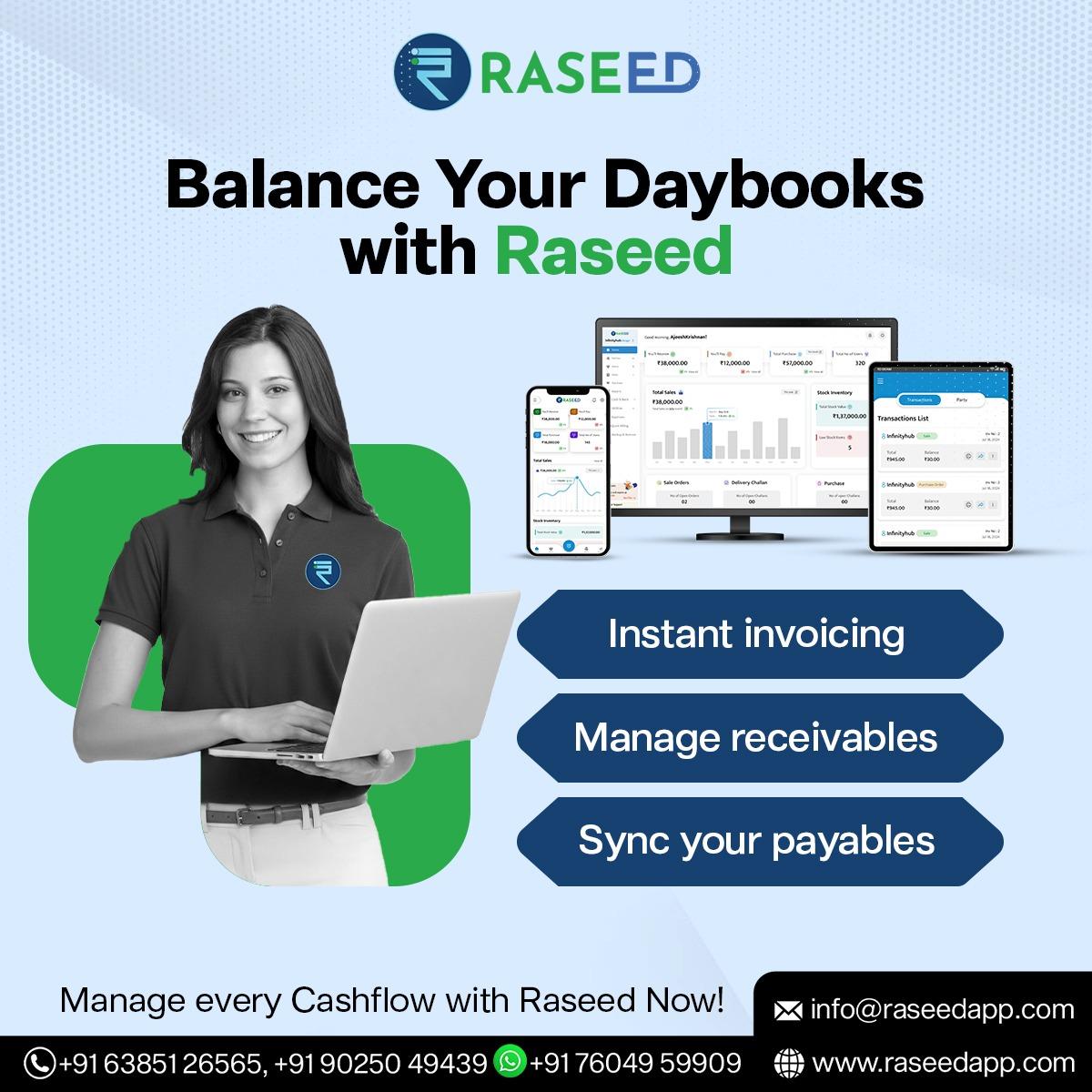


Most businesses still talk about billing software like it’s a boring utility: “Generate invoices, collect payments, move on.” That mindset is quietly expensive—especially if you’re a distributor, where margins are thin, SKU counts are high, and cash flow is the real scoreboard.
Here’s the opinion I’ll stand by: billing is no longer a clerical task. It’s an operating system for revenue. The right billing setup doesn’t just print invoices—it tightens your order-to-cash cycle, reduces stock chaos, and turns scattered decisions into a single source of truth.
distributor-focused upgrades you should demand from billing software in 2026—plus what to look for if you’re evaluating solutions like Raseed built for distributor workflows (inventory + invoices + POs + payments in one flow).
1) Stop “Invoice Generation.” Start Order-to-Cash Orchestration
A distributor’s billing isn’t a document—it’s a process: quotation → PO → pick/pack/ship → invoice → payment → reconciliation → follow-up. If your tool handles only the “invoice” moment, you’re running revenue on spreadsheets and memory.
Look for software that keeps these steps connected so invoices and POs can be created, shared, and tracked without jumping between tools. Raseed, for example, highlights instant sharing of invoices and POs as a core distributor need.
2) Make Inventory the Boss (Not a Separate App)
If inventory and billing live in separate worlds, you’ll always be fixing symptoms:
-
overselling,
-
mis-picks,
-
wrong pricing per SKU,
-
“we’ll adjust later” credits that ruin reporting.
Distributor-grade billing software should sit on top of inventory—so billing actions reflect stock reality (and not yesterday’s spreadsheet). Raseed positions distributor billing around stock + customer management as part of the same workflow.
3) Make Invoices Shareable Where Customers Actually Are
Your customers don’t live in your ERP. They live in WhatsApp threads, email chains, and phone calls.
Modern billing software should let you instantly share invoices through channels customers respond to. Some platforms explicitly support sharing bills through WhatsApp/email to speed approvals and reduce “I didn’t receive it” delays.
4) Treat Payments Like a Conversion Funnel (Yes, Really)
If you’re serious about cash flow, remove friction from payment.
One simple upgrade: payment links / QR-based payments directly attached to the invoice so your customer can pay in seconds, not days.
Raseed calls out sharing payment QR links as a distributor feature—this is exactly the kind of “small” change that shortens receivables.
5) Build Follow-Ups Into the System (So Collections Aren’t Personal)
A lot of teams avoid collections because it feels awkward. Software shouldn’t.
You want:
-
due tracking,
-
reminders,
-
visibility into pending/overdue invoices.
Some billing systems include payment reminders to proactively track dues and improve revenue predictability.
6) Demand Tax Compliance That Doesn’t Slow You Down
Tax compliance can’t be a “month-end event.” It needs to be native to billing—especially for GST contexts.
Raseed positions itself as GST billing/invoicing software that generates GST-compliant invoices and supports tax workflows. Even if you’re not in India, the broader lesson is universal: compliance must be automatic, not heroic.
7) Put Every Invoice on a Timeline (So Disputes Die Fast)
Distributors lose time on disputes because there’s no single history:
-
who approved,
-
what was shipped,
-
what was paid,
-
what’s pending.
Some platforms keep invoice history so you can instantly see paid/pending/overdue and reduce back-and-forth.
8) Cloud + Multi-Device Isn’t “Nice.” It’s Operational Continuity
If billing happens only on one machine, your business is one laptop crash away from chaos.
Cloud-based billing matters because distributors operate everywhere: warehouse, field, office, on the road. Raseed repeatedly emphasizes cloud billing and multi-device/mobile usage as part of its approach.
9) Multi-Warehouse Reality Needs First-Class Support
Once you manage multiple warehouses (or even multiple storage locations), billing mistakes multiply:
-
wrong warehouse deductions,
-
wrong fulfillment routing,
-
inaccurate “available” stock.
Distributor-oriented billing platforms talk explicitly about warehouse support and stock-level oversight as part of the billing workflow—not as an add-on.
10) Reporting Should Answer “What Do I Do Next?”
A dashboard that only tells you what happened is a museum exhibit.
What you want from billing software is decision support:
-
which customers are slipping into late payments,
-
which SKUs are high-velocity,
-
which routes/warehouses are causing delays,
-
what cash inflow looks like next week.
Raseed’s distributor positioning includes analyzing key data and operational growth—this is the direction billing tools must go.
11) The Real Test: Can It Replace “Human Glue”?
Every distributor has “human glue”—the person who remembers exceptions:
-
special rates,
-
customer credit behaviors,
-
seasonal SKUs,
-
informal approvals.
Your billing software should reduce dependency on that person by centralizing billing + inventory + accounting functions in one place. Independent software listings describe Raseed as combining billing, invoicing, inventory, and accounting in a unified platform.
A Practical Way to Choose Billing Software (Without Getting Sold To)
Before you pick anything, run this quick checklist:
-
Can we go from PO → invoice → payment without switching tools?
-
Is inventory tied to billing so stock updates are automatic?
-
Can we share invoices where customers respond (WhatsApp/email)?
-
Do invoices support fast payment options like QR/payment links?
-
Does it support compliance (GST/tax) natively?
If a tool checks these boxes, you’re not buying “billing software.” You’re buying a cash-flow and operations engine.
And that’s the point: in 2026, billing is no longer the end of the process. It’s the control center.

)
)