Notifications


7 minutes, 48 seconds
-64 Views 0 Comments 0 Likes 0 Reviews
Wireless technology has become the backbone of modern life. Smartphones, smart buildings, connected vehicles, and IoT devices all depend on uninterrupted radio communication. While this connectivity creates convenience and efficiency, it also introduces a critical question that many organizations and institutions are now asking: What happens when signals fail—or must be deliberately controlled?
This growing awareness has brought the Signal jammer into a new conversation. Not as a disruptive device, but as a tool for education, preparedness, and controlled RF environment testing . In a world increasingly dependent on wireless systems, understanding signal interruption has become just as important as understanding signal transmission.
Modern operations rely heavily on continuous wireless availability. Logistics systems, mobile payment platforms, access control systems, emergency communications, and navigation tools all assume stable connectivity. However, real-world conditions do not always cooperate.
Signal disruption can occur due to:
When these situations arise, many organizations realize they are unprepared to operate without wireless support. This is where Portable Cell Phone Signal Blocker becomes relevant—not to create chaos, but to simulate real-world disruptions and improve resilience .
One emerging application of signal jammers is within training programs and simulation exercises . Security teams, emergency responders, and technical staff increasingly participate in drills that test how systems perform under limited or unavailable connectivity.
In controlled settings, signal jammers allow teams to:
These exercises help organizations understand weak points in their infrastructure and prepare for unexpected signal loss scenarios.
Another important use case involves evaluating systems designed to operate without continuous wireless input. Some industrial equipment, safety systems, and autonomous platforms claim to function under limited connectivity.
By temporarily suppressing surrounding signals, testers can verify:
In this context, the Bluetooth Jammer becomes a testing instrument , helping engineers validate performance claims and improve product reliability.
Emergency preparedness is no longer limited to natural disasters and physical threats. Communication disruption has become a recognized risk category. Power outages, cyber incidents, and infrastructure damage can all impact wireless availability.
Signal jammers allow planners to simulate communication limitations and design:
By experiencing controlled signal loss in advance, organizations avoid panic and confusion during real emergencies.
Wireless technology is invisible, which often leads to misunderstanding. Many people use networks daily without knowing how signals behave, how interference occurs, or how spectrum congestion affects performance.
Educational institutions and technical training programs increasingly use RF simulation tools—including controlled jamming devices—to demonstrate:
This hands-on exposure improves technical literacy and helps future engineers and technicians develop realistic expectations about wireless systems.
As smart buildings and automated facilities grow in popularity, managing RF boundaries becomes more important. Not every space needs full wireless coverage at all times. Some areas require controlled connectivity to prevent signal overlap, noise interference, or operational conflicts.
GPS Tracker Jammer provide insight into how wireless zoning can be implemented. By observing how systems behave when signals are selectively limited, facility managers gain valuable data for designing more efficient RF layouts.
It is essential to acknowledge that signal jammers are regulated in many countries. Their use is often restricted to authorized environments or specialized applications. Responsible organizations approach jamming technology with caution and legal awareness.
When used properly, signal jammers are not tools of disruption, but instruments for:
This responsible framework ensures that jamming technology contributes to knowledge and preparedness rather than interference with public communication networks.
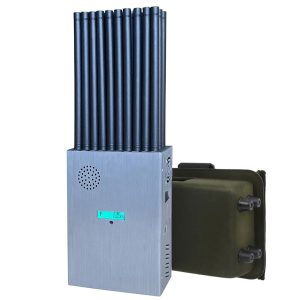
The digital world has created an illusion of constant connectivity. In reality, wireless systems are vulnerable to physical, environmental, and technical limitations. Organizations that understand these limitations gain a strategic advantage.
Signal awareness allows teams to:
Signal jammers, when viewed through this lens, become part of a broader learning process rather than a simple blocking tool.
As interest in RF preparedness grows, reliable information becomes increasingly valuable. TheJammerBlocker.com serves as a platform for understanding signal control technologies, RF principles, and the evolving role of Anti Drone Blocker in modern environments.
By providing educational insight and technical awareness, the platform supports organizations and individuals who want to better understand how wireless systems behave—and how they can be responsibly managed.
Wireless technology will continue to expand. More devices, more networks, and more automation will shape the future. With this growth comes responsibility: understanding not only how signals connect us, but also what happens when those connections are interrupted.
Signal jammers highlight an important reality: true technological readiness includes knowing how to operate with and without wireless communication .
By incorporating RF awareness, training simulations, and preparedness planning, organizations take a proactive step toward resilience in an increasingly connected—and complex—digital world.
https://www.thejammerblocker.com/remote-control-car-lock-jammers/


